Summer has quietly become the most practical and commercially sound season for coach group travel in the Austrian Alps. Roads stay open, schedules remain predictable, and the range of experiences expands far beyond what winter allows. For tour operators managing groups of 20 to 70 guests, especially senior leisure travelers, these factors shape not just convenience but profitability and long-term partnerships.
What stands out is the region’s adaptation to group travel during the warmer months. From Innsbruck summer excursions to scenic alpine drives and accessible hiking trails, the Austrian Alps in summer offer a balanced mix of activity and comfort. And that’s where it starts to matter, because reliable operations and satisfied travelers lead to repeat business.
Why is summer the best season to bring coach groups to the Austrian Alps
The question of why is summer the best season to bring coach groups to the Austrian Alps comes down to three core factors: operational ease, guest satisfaction, and program flexibility. During the summer months, the region becomes more accessible, more predictable, and more adaptable to structured group itineraries.
Unlike winter, where weather conditions often dictate schedules, summer in Austria provides consistency. This allows tour operators to plan multi-day programs with confidence. At the same time, the Austrian Alps summer experience extends beyond a single activity. Guests can enjoy hiking trails, cultural visits, cable cars, and scenic drives without the limitations imposed by snow conditions.
For coach operators working across Central Europe, this translates into fewer disruptions, smoother logistics, and a stronger overall travel product.
Stable weather and comfortable travel conditions in the Austrian Alps in summer
Weather plays a decisive role in group travel, and summer in the Alps offers a level of stability that winter simply cannot match. Average daytime temperatures in Tyrol range between 18°C and 25°C, creating a comfortable climate for outdoor activities and sightseeing.
In practical terms, this means fewer delays and fewer last-minute changes. Roads remain clear, mountain passes stay open, and public transport operates without seasonal interruptions. For long-distance coach routes, especially those connecting Austria, Germany, and Switzerland, this reliability is critical.
The absence of extreme conditions also makes travel easier for senior groups. There is no risk of icy surfaces or cold-related discomfort, which often affects winter travel decisions.

Why coach logistics work better during the summer months
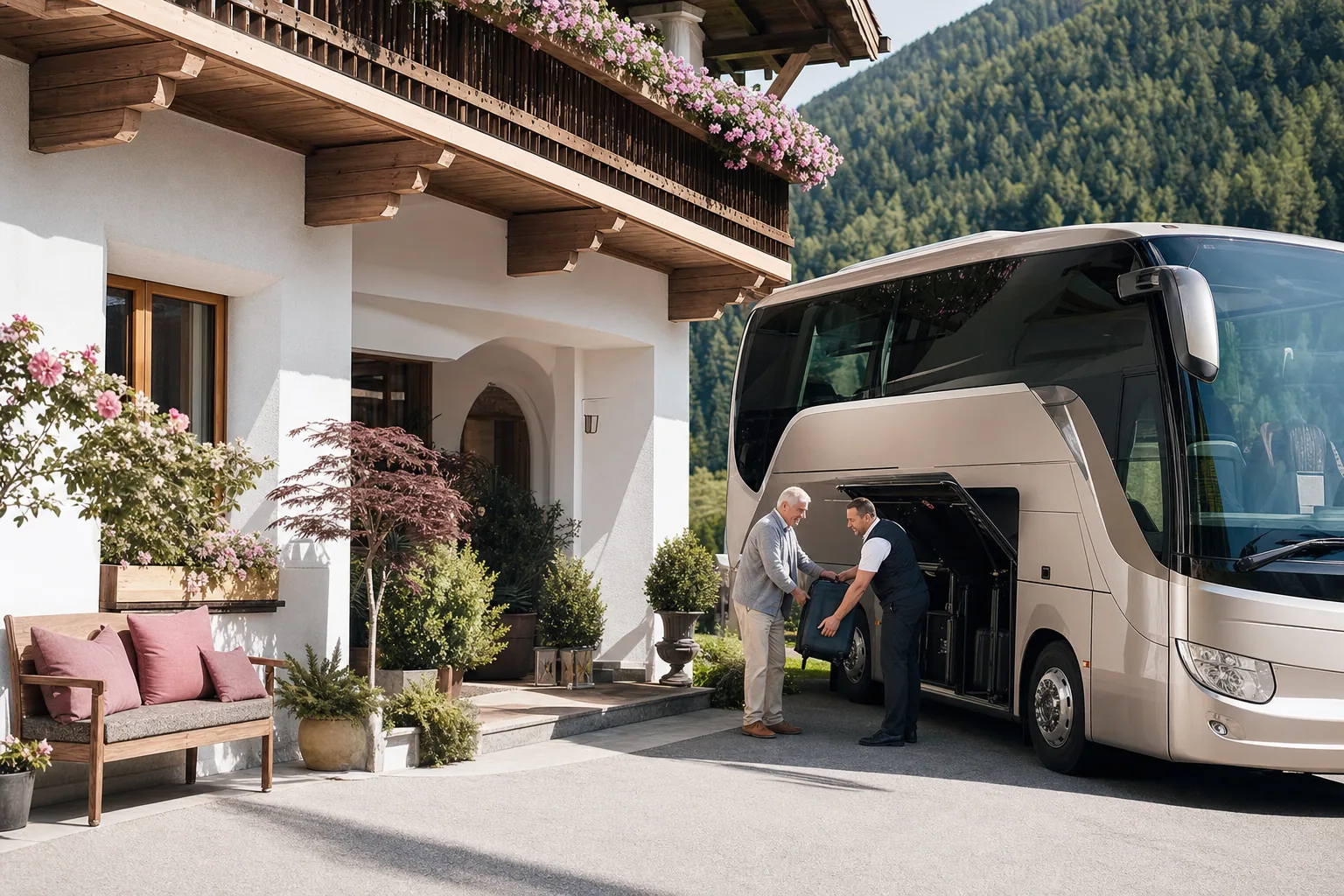
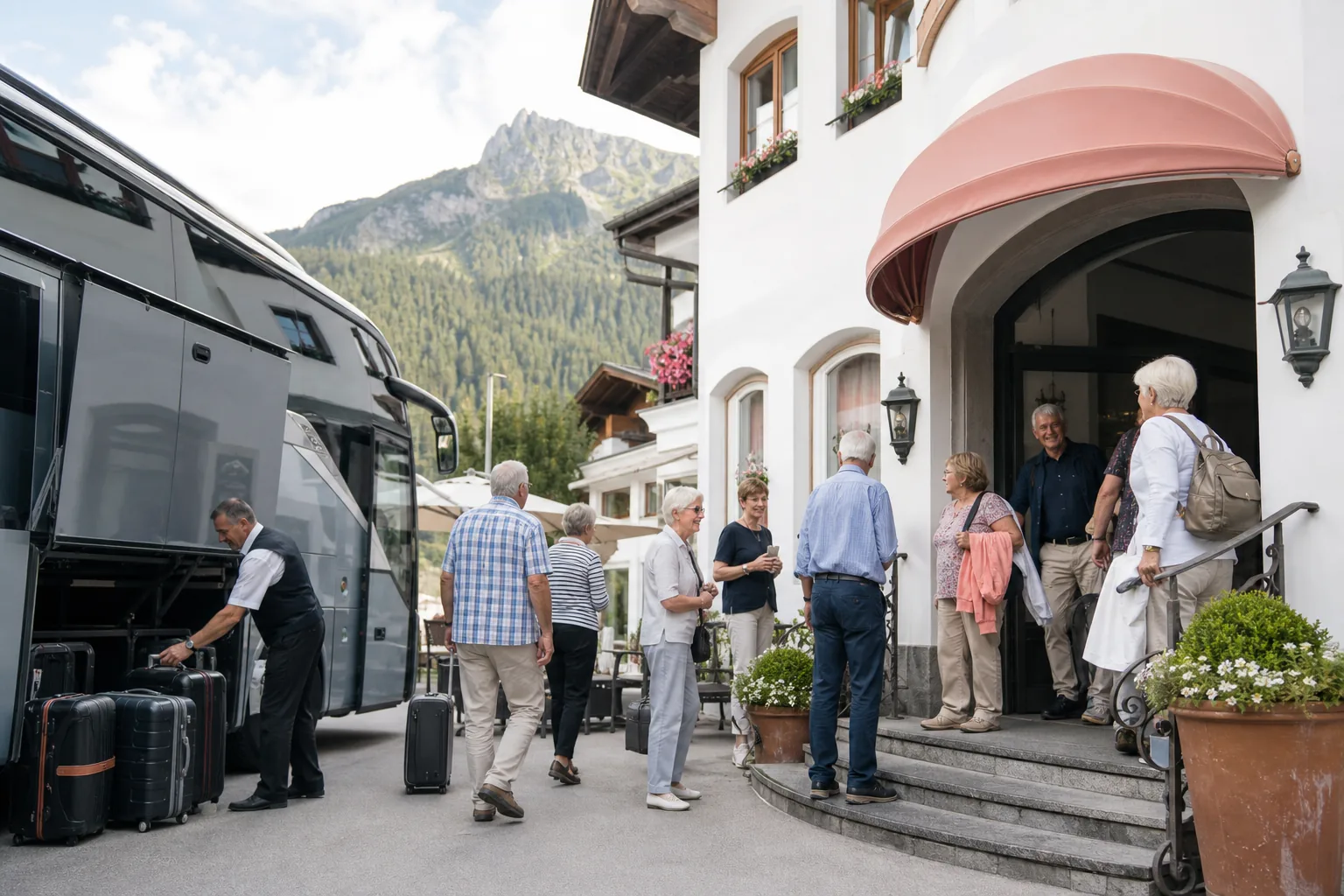
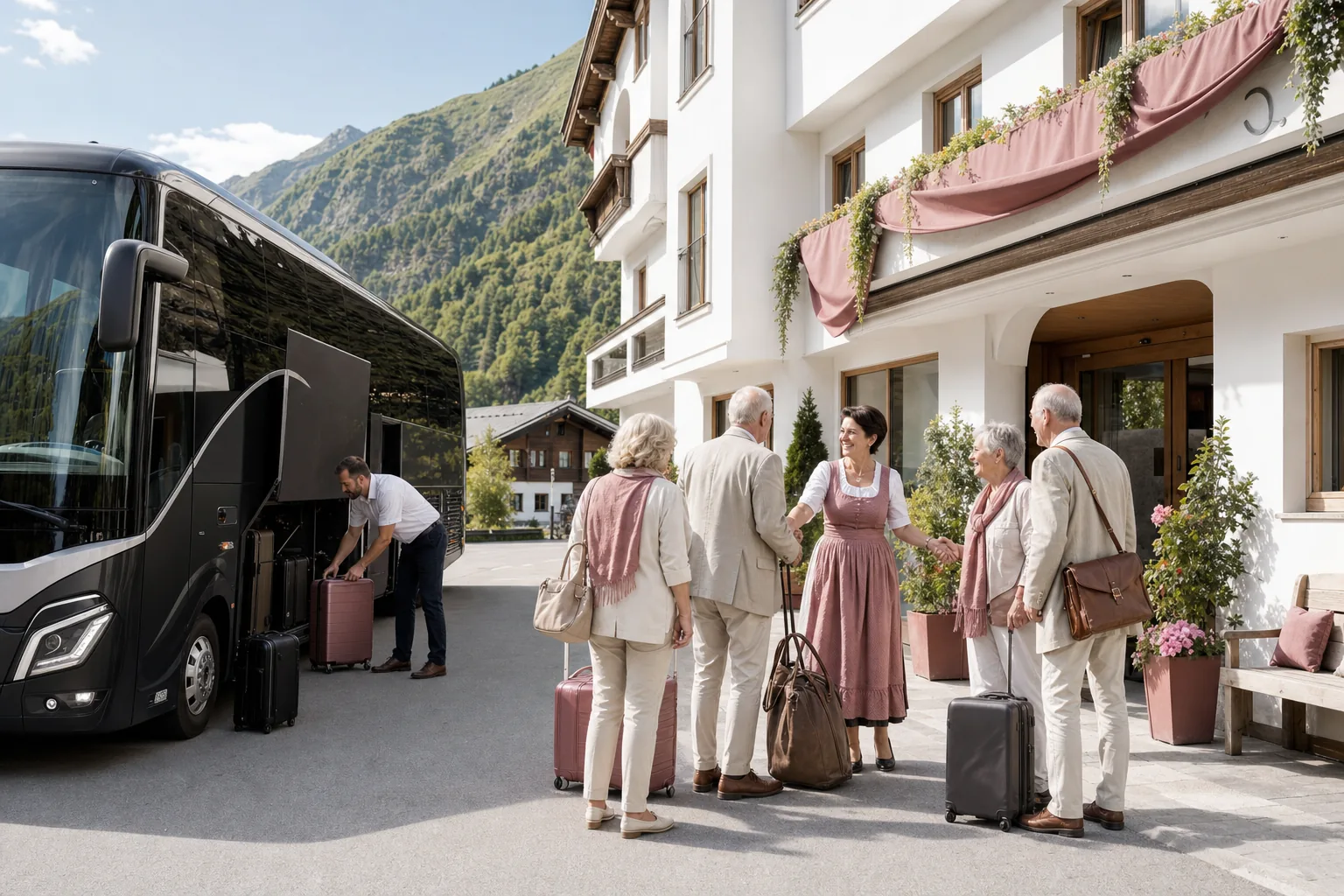
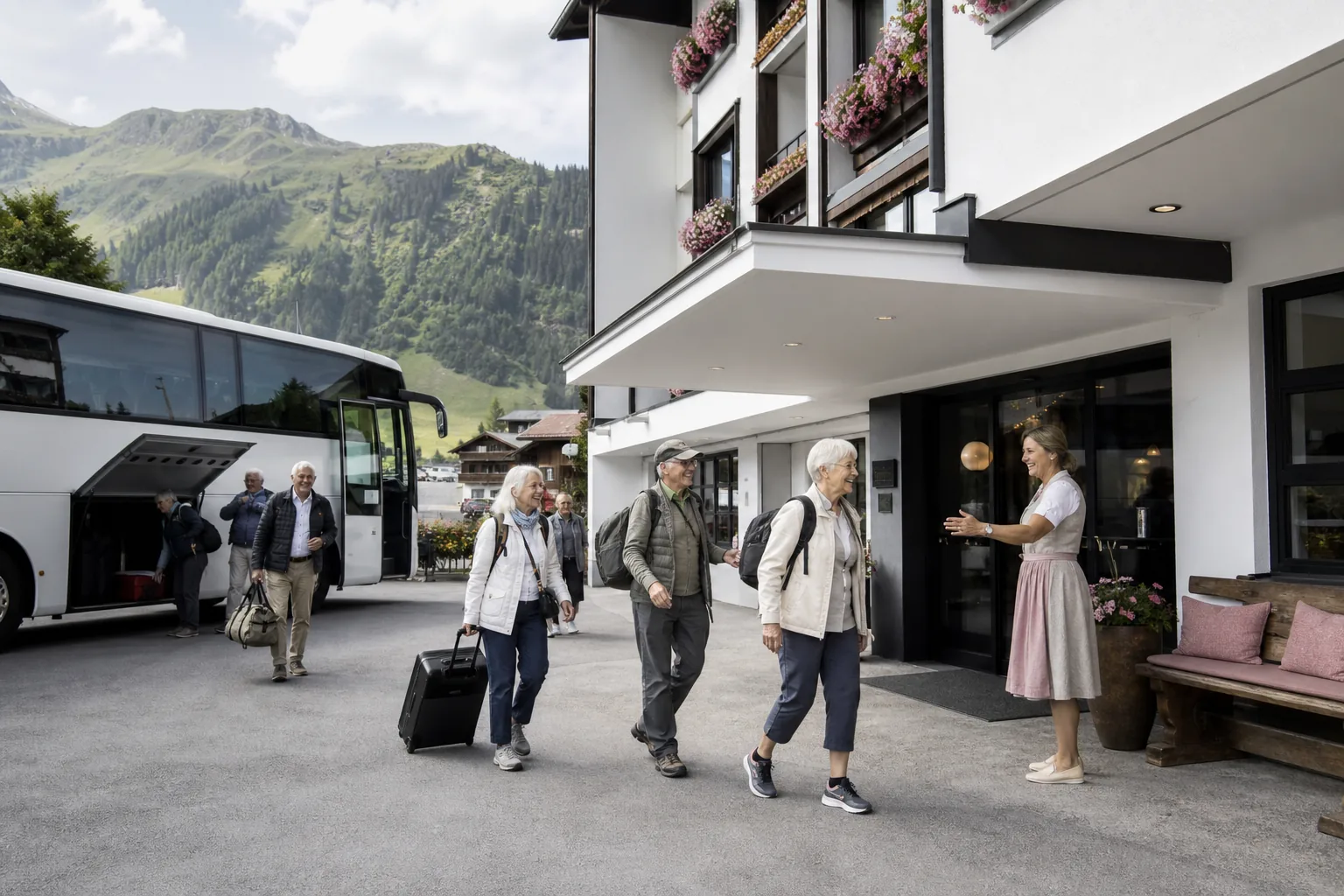
From a logistical standpoint, summer offers a clear advantage. Coaches can access alpine regions without restrictions, and parking infrastructure is fully operational. Hotels designed for group travel provide direct access points, making arrival and departure seamless.
This is particularly evident when working with group-friendly accommodation and logistics support, where coach parking, room allocation, and meal coordination are structured specifically for large groups.
The result is a smoother operational flow. Drivers face fewer constraints, tour leaders manage schedules with greater precision, and guests experience a more relaxed journey.
Outdoor activities make the Austrian Alps in summer ideal for groups
When groups arrive in the Austrian Alps during the warmer months, they don’t face a single-track experience. What they get instead is variety, real variety. Not everything revolves around one activity, and that’s exactly what makes planning easier for tour operators. Some guests want light walks, others prefer a bit more movement, and a few simply want to enjoy the scenery without effort. Summer allows all of that to exist side by side without friction.
You’ll notice that the region naturally supports mixed-ability groups. No need to split people up or redesign the itinerary halfway through. Everything fits into place, almost quietly.
| Activity Type | What Groups Actually Experience | Why It Works for Coach Tours |
| Hiking trails | Well-marked paths across valleys and mountain routes | Flexible difficulty levels suit mixed groups |
| Mountain biking | Scenic routes with varying intensity | Optional add-on for active travelers |
| Cable cars | Easy access to higher viewpoints | Reduces physical strain, keeps schedule tight |
| High ropes courses | Light adventure experiences | Adds variety without logistical complexity |
| Petting zoo visits | Simple, relaxed interaction with local life | Works well for family-friendly groups |
| Scenic mountain trails | Long-distance panoramic routes | Ideal for slow-paced exploration days |
What stands out here is not just the number of options, but how easily they fit into a structured group program. That’s where the Austrian Alps in summer quietly outperform expectations.
What makes summer perfect for senior and leisure coach groups
There’s a noticeable shift in atmosphere once summer arrives in the Alps. Things slow down, but not in a dull way, more in a way that feels manageable. For senior travelers, especially, that balance matters. They don’t want to rush, and they don’t want to struggle through extreme conditions either.
The environment during these months simply feels more forgiving. No harsh cold, no slippery surfaces, no pressure to move fast. Just steady, comfortable travel that allows people to actually enjoy where they are.
| Factor | What It Means for Senior Groups | Practical Benefit |
| Mild temperatures | No exposure to extreme cold or heat | Greater comfort throughout the day |
| Accessible terrain | Gentle walking paths and flat areas are available | Reduces physical strain |
| Cable car access | Easy reach to alpine views | No need for demanding climbs |
| Relaxed pacing | Flexible daily schedules | Less fatigue across multi-day trips |
| Scenic rest points | Frequent stops with seating and views | Encourages longer, enjoyable stays |
It’s not about removing activity, it’s about making sure activity feels accessible. That difference tends to define whether a trip feels enjoyable or exhausting.
Excursions and day trips for coach groups can easily include
Location plays a central role in itinerary design, and the Austrian Alps provide a strategic base for multi-destination travel. Innsbruck summer visits remain a highlight, with landmarks such as the Golden Roof offering cultural depth alongside scenic surroundings.
Beyond Innsbruck, Austria, summer attractions, groups can explore nearby regions across borders. Day trips to Germany or Switzerland expand the itinerary without requiring additional accommodation changes.For planners developing structured programs, incorporating summer group excursions in St Anton ensures a balance between nature and culture. This flexibility enhances the overall value of the tour.

The role of food, culture, and local experience in group satisfaction
Food is often underestimated in travel planning, yet it plays a central role in group satisfaction. Austrian cuisine, with its regional focus and hearty dishes, creates a sense of authenticity that resonates with travelers.
Group dining experiences, particularly in family-run environments, add a personal dimension to the stay. This becomes especially relevant when guests enjoy regional cuisine and a group dining experience that reflects local traditions. Cultural elements, from village festivals to traditional architecture, further enrich the journey.
Choosing the right hotel for coach groups in the Austrian Alps
Accommodation determines how smoothly a group tour operates. The right property must combine capacity, flexibility, and infrastructure.
Hotels that cater to group travel typically offer multiple room configurations, communal spaces, and direct coach access. A family-run hotel in St Anton provides the added advantage of personalized service, while group accommodation options ensure that different group sizes can be accommodated without compromise. This balance between scale and service quality defines a successful group stay.
Summer vs winter for coach tourism: a strategic comparison
Seasonality shapes how a coach tour runs, whether operators realize it at first or not. Summer and winter in the Alps feel like two completely different operating environments. One allows control; the other often demands adaptation.
| Factor | Summer | Winter |
| Road conditions | Clear and predictable | Weather-dependent and often restricted |
| Scheduling | Stable and reliable | Frequent adjustments required |
| Cost structure | More balanced pricing | Higher peak-season costs |
| Activity range | Wide and varied | Focused mainly on snow activities |
Looking at it this way, the difference becomes less about preference and more about operational clarity. Summer simply removes layers of uncertainty.
Group travel demand trends in Central Europe
Travel patterns across Central Europe have shifted in subtle but important ways over the past few years. Group travel hasn’t disappeared; in fact, it has become more structured and more intentional.
Operators now focus less on volume and more on consistency. And within that shift, summer travel in the Alps has gained steady traction.
| Segment | Trend |
| Senior travel | Increasing steadily |
| Coach tourism | Stable with strong repeat demand |
| Austrian summer holiday | Growing popularity |
According to the European Commission, senior travel continues to expand across Europe, with demand for structured group experiences remaining consistent.
Sample structure of a 5-day coach itinerary in the Austrian Alps
A well-planned itinerary doesn’t try to do everything. It creates rhythm. Arrival, exploration, variation, and rest, all balanced in a way that feels natural for the group.
| Day | Activity |
| Day 1 | Arrival and orientation |
| Day 2 | Innsbruck summer excursion |
| Day 3 | Alpine hiking trails and cable cars |
| Day 4 | Cross-border scenic drive |
| Day 5 | Departure |
For a more detailed approach, planners often rely on frameworks such as a 5-day coach itinerary through Tyrol to structure efficient programs.
Why long-term partnerships matter in coach tourism
Coach tourism thrives on consistency. Operators prefer working with partners who understand their needs and can deliver reliable service across multiple seasons.
Long-term cooperation reduces uncertainty, improves planning efficiency, and increases lifetime value per client. Establishing direct communication through a group partnership inquiry allows both sides to align expectations early.

Why is summer the best season to bring coach groups to the Austrian Alps
Returning to the central question, why is summer the best season to bring coach groups to the Austrian Alps, the answer lies in its balance. Summer combines accessibility, variety, and reliability in a way that no other season can replicate.
From Innsbruck, Austria, summer attractions to the broader alpine landscape, the region adapts naturally to group travel. Whether it is a summer holiday in Austria itinerary or a multi-country alpine tour, the conditions support efficient planning and high guest satisfaction.
A season that works for both operators and travelers
Summer in the Alps doesn’t try to impress with extremes. It works because things run smoothly. Roads stay open, schedules hold, and guests remain comfortable from start to finish. For operators, that means fewer surprises. For travelers, it means a better overall experience. And when both sides benefit, the result tends to repeat itself season after season.
That’s where a partner like Arlbergreisen fits naturally into the picture. With a clear focus on coach tourism, flexible group capacity, and an understanding of how these trips actually function on the ground, the approach goes beyond accommodation. It becomes part of the planning process itself.If you’re looking to build reliable summer programs in the Austrian Alps, programs that run smoothly and keep your groups coming back, this might be the right place to start.