Why do coach groups prefer mountain destinations in summer? The answer usually comes down to comfort, scenery, cleaner air, and easier travel logistics. Across Europe, a growing number of travel agencies now choose mountain regions instead of crowded coastal resorts during the hottest months of the year.
The Austrian Alps, especially St. Anton am Arlberg, have become increasingly attractive for senior coach groups because they combine cool temperatures, reliable infrastructure, scenic day trips, and hotels that understand the operational side of group tourism.
For tour operators, mountain travel also creates better long-term customer satisfaction, stronger repeat business, and smoother coordination for multi-day itineraries.
Why Senior Coach Tours Escape to the Alps Every Summer
Summer travel patterns across Europe have shifted noticeably over the last decade. Coach operators that once focused heavily on beach resorts now face a different challenge. Heatwaves continue to affect major cities and coastal regions during peak travel months, and older travelers increasingly prefer destinations where temperatures remain comfortable throughout the day.
That shift explains why coach groups prefer mountain destinations in summer more than ever before because of extreme summer heatwaves across Europe in 2022 and 2023. Alpine regions provide cooler conditions, quieter surroundings, and scenic landscapes that suit both active travelers and guests who simply want a peaceful escape.
In Austria, the Arlberg region has become particularly attractive because it combines fresh air, organized tourism infrastructure, panoramic excursions, and easy access for group travel.
For travel agencies, the decision is also practical. Mountain hotels often provide better coach parking, less congestion, easier excursion planning, and more flexibility for large groups. That matters when coordinating 40 to 70 guests across several days.
The Austrian Alps continue to attract a growing number of senior leisure groups from Germany, Belgium, the Netherlands, the United Kingdom, France, and Italy. Many operators now build entire mountain summer itineraries around destinations such as St. Anton am Arlberg because the experience aligns naturally with what mature travelers actually want from a holiday.
| Summer Travel Preference | Why It Matters for Coach Groups |
| Cooler temperatures | Better comfort during excursions |
| Fresh alpine air | Appeals to health-conscious travelers |
| Scenic landscapes | Higher guest satisfaction |
| Reliable road infrastructure | Easier coach operations |
| Quiet atmosphere | Better suited to senior tourism |
| Flexible group hotels | Easier coordination for agencies |
Why Do Coach Groups Prefer Mountain Destinations in Summer?
The question appears frequently within the European group tourism industry because traveler expectations have changed. Travelers today no longer choose destinations only for famous landmarks. Comfort now plays a major role in purchasing decisions, especially among mature guests.
Why do coach groups prefer mountain destinations in summer? First, mountain regions remain significantly cooler than urban or coastal areas during July and August. According to the European Environment Agency, Europe continues to experience more frequent summer heatwaves, particularly in southern and central regions. Alpine areas maintain milder temperatures because of their high altitude climate conditions.
That climate advantage changes the entire travel experience. Guests sleep better, feel less exhausted during excursions, and spend more time outdoors. For senior coach groups, those details matter enormously.
Second, mountains in summer offer a slower and more comfortable travel rhythm. Instead of crowded beaches and noisy nightlife districts, travelers enjoy scenic drives, quiet villages, panoramic viewpoints, and local culture. The atmosphere feels calmer and more manageable for organized group tourism.
Third, mountain destinations support operational reliability. Travel agencies need hotels that understand coach logistics, meal coordination, room allocations, and excursion planning. Mountain hotels in Austria often specialize in this style of travel because the region has decades of experience with coach tourism.
This is one reason many operators choose family-run properties such as the hotels connected with Arlbergreisen. Their focus on group accommodation, coach parking, excursion support, and long-term partnerships aligns directly with the needs of travel agencies across Europe.
Travel behavior also reflects broader tourism trends. The European Travel Commission has reported increased interest in nature-based tourism and wellness-oriented travel experiences. Travelers increasingly look for destinations with open space, fresh air, and authentic local hospitality. And that is exactly where the Austrian Alps perform exceptionally well.
Cooler Temperatures Make Alpine Travel More Comfortable
Extreme summer temperatures now influence travel planning far more than they did a decade ago. During recent European summers, several popular coastal destinations recorded temperatures above 40°C. Older travelers often find those conditions exhausting, especially during multi-day coach tours. Mountain regions provide a very different experience.
The Austrian Alps remain noticeably cooler throughout the summer season. Even after a long coach journey through southern Germany or western Austria, travelers usually notice the temperature change almost immediately once the road begins climbing toward the Arlberg region. Windows open. Jackets come back out in the evening. The pace slows down a little.
Even during warmer periods, mountain evenings usually stay pleasant enough for comfortable sleep. That alone improves traveler satisfaction significantly.
For coach operators, temperature directly affects itinerary quality. Guests are more willing to participate in excursions, village walks, scenic viewpoints, and outdoor lunches when the weather remains moderate. Travelers also spend less time inside hotels, avoiding the heat. This helps agencies deliver a better overall tour experience.
A study published by the World Meteorological Organization noted that climate-related tourism shifts are becoming increasingly visible across Europe as travelers search for cooler destinations during peak summer periods. Alpine tourism regions have benefited from this change.
The comparison between coastal tourism and mountain summer travel has become even more noticeable among senior groups.
| Travel Factor | Alpine Regions | Coastal Resorts |
| Average summer comfort | Mild temperatures | Frequent heatwaves |
| Air circulation | Cool mountain airflow | High humidity |
| Noise levels | Quiet surroundings | Crowded tourist zones |
| Excursion comfort | Better daytime conditions | Heat-related fatigue |
| Group mobility | Easier pacing | Physical strain during heat |
Travel agencies increasingly understand that comfortable travelers become repeat customers. That matters because repeat bookings remain one of the most valuable parts of the coach tourism business model.

Fresh Air and High Altitude Appeal to Senior Travelers
One reason why coach groups prefer mountain destinations in summer is the growing connection between travel and wellness. Senior travelers today often look for destinations that feel restorative rather than exhausting.
They want scenery, comfort, good food, manageable activity levels, and time outdoors without physical stress. And in places like Tyrol, that slower rhythm feels natural rather than manufactured for tourists.
The Austrian Alps provide exceptionally clean air compared to many urban regions across Europe. High altitude environments also create cooler airflow and lower pollution levels. Travelers frequently describe mountain holidays as mentally relaxing because the pace feels slower and less chaotic.
The World Health Organization continues to emphasize the value of physical activity and nature exposure for mental and physical well-being. Outdoor environments encourage movement without forcing intensive activity levels. That balance works particularly well for coach tourism.
Research published by the European Travel Commission has also shown continued growth in wellness-oriented travel across Europe, particularly among travelers over 55 who increasingly prioritize outdoor environments, moderate climates, and slower-paced tourism experiences.
Some guests enjoy gentle walks through alpine villages, while others prefer panoramic coach excursions or scenic lunch stops. More active travelers may also participate in trail running vacations, walking tours, or light hiking routes. The flexibility of mountains in summer allows agencies to accommodate mixed mobility levels within one group.
The National Park Austria has also highlighted the growing demand for nature-oriented travel, noting that travelers increasingly seek “space, tranquility, and authentic experiences in nature.”
This trend helps explain why mountain tourism in summer continues to grow among mature leisure travelers. For operators, the appeal extends beyond scenery. Wellness-focused travel often creates stronger emotional satisfaction, which increases repeat group bookings and long-term travel agency partnerships.
The Austrian Alps Offer Better Group Logistics Than Coastal Resorts
Group travel success depends heavily on the organization behind the scenes. Travelers rarely notice logistical problems unless something goes wrong. Coach operators, however, understand how important parking access, luggage handling, meal timing, room coordination, and excursion scheduling can become during a multi-day itinerary. This is another reason why coach groups prefer mountain destinations in summer.
Alpine destinations in Austria generally provide smoother operational conditions than crowded coastal tourism zones. Road access tends to be more organized, traffic congestion is often lower, and many mountain hotels were specifically designed to accommodate coach arrivals.
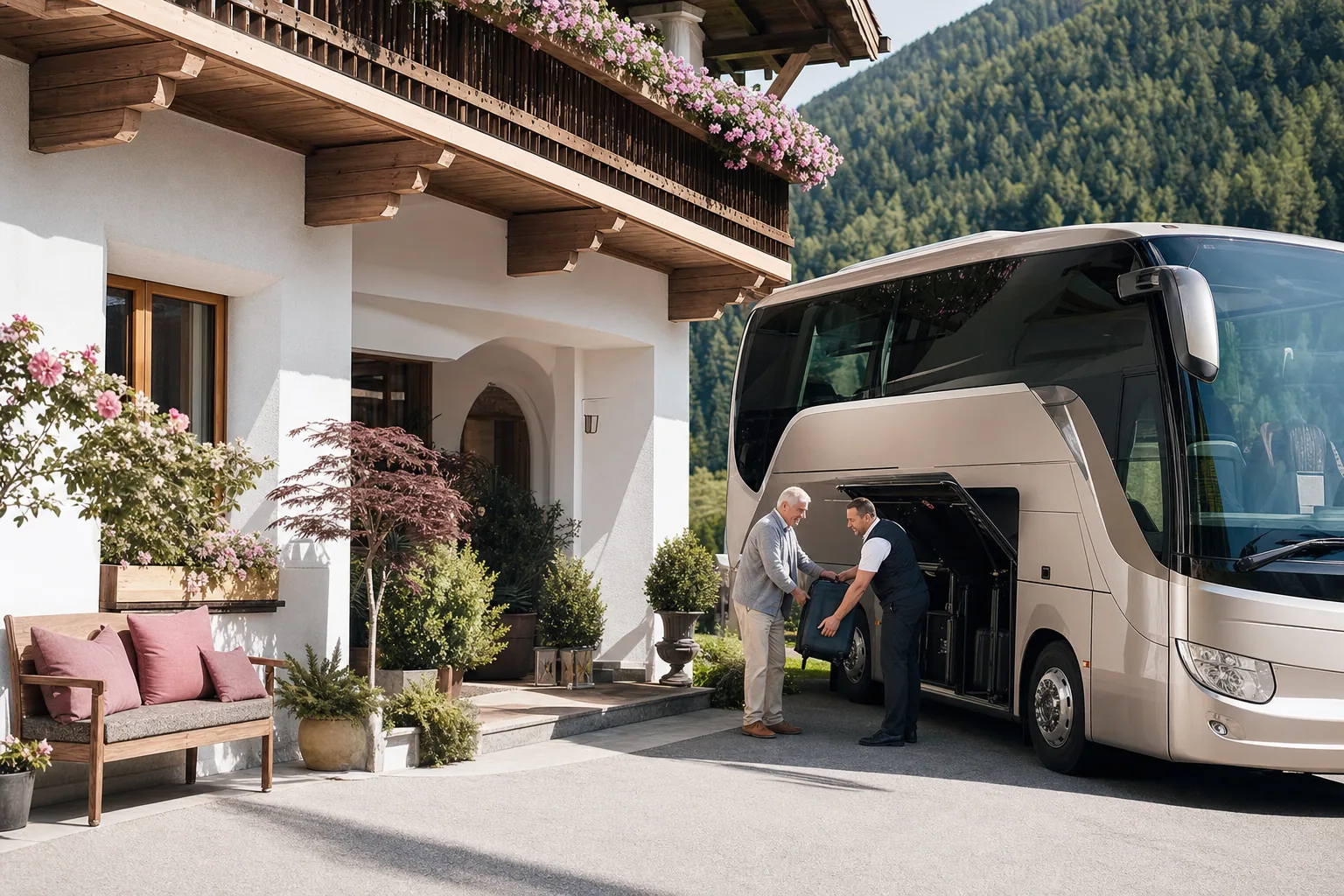
In St. Anton am Arlberg, several group-oriented hotels provide direct coach parking, easier loading access, and flexible room configurations for large travel groups.
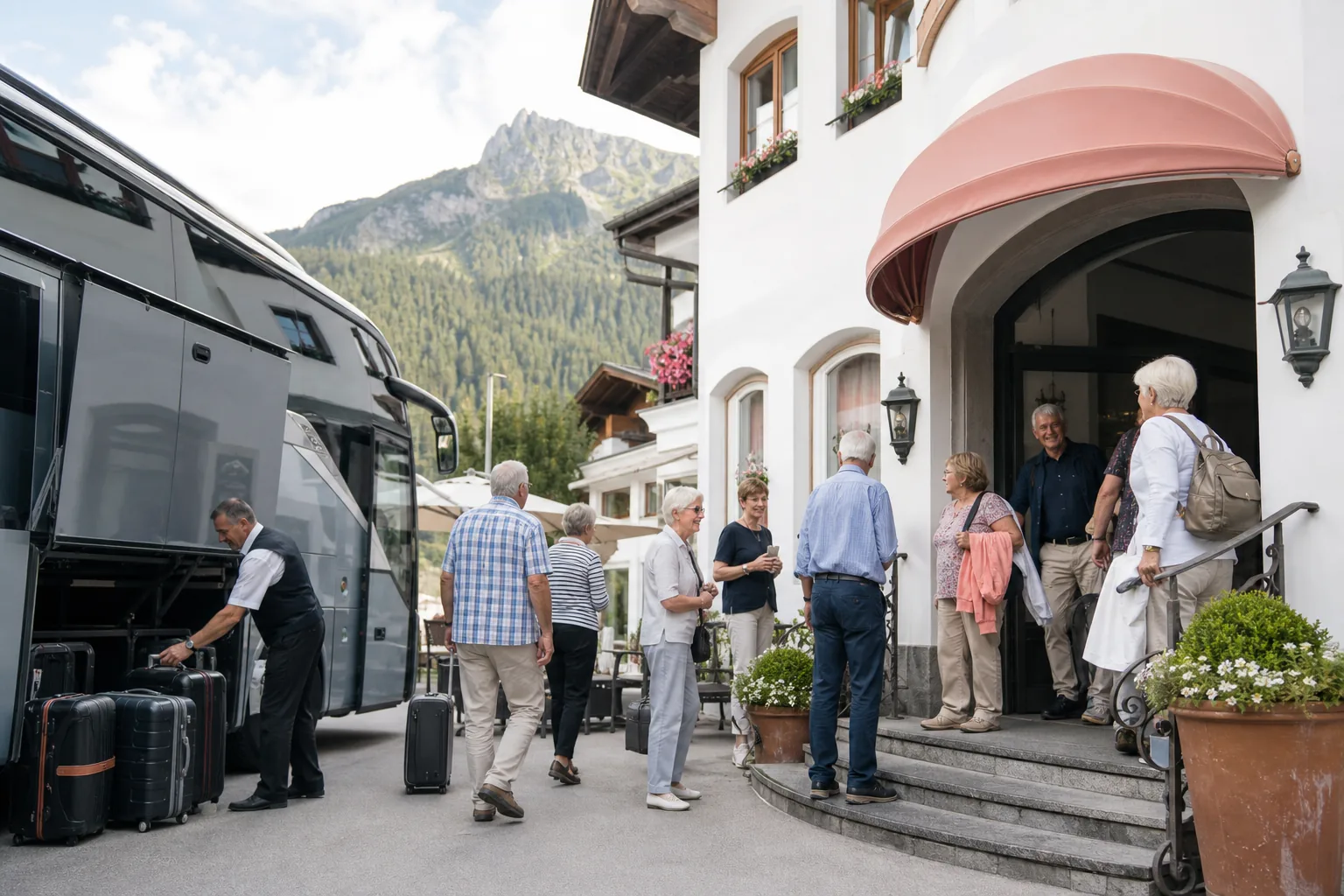
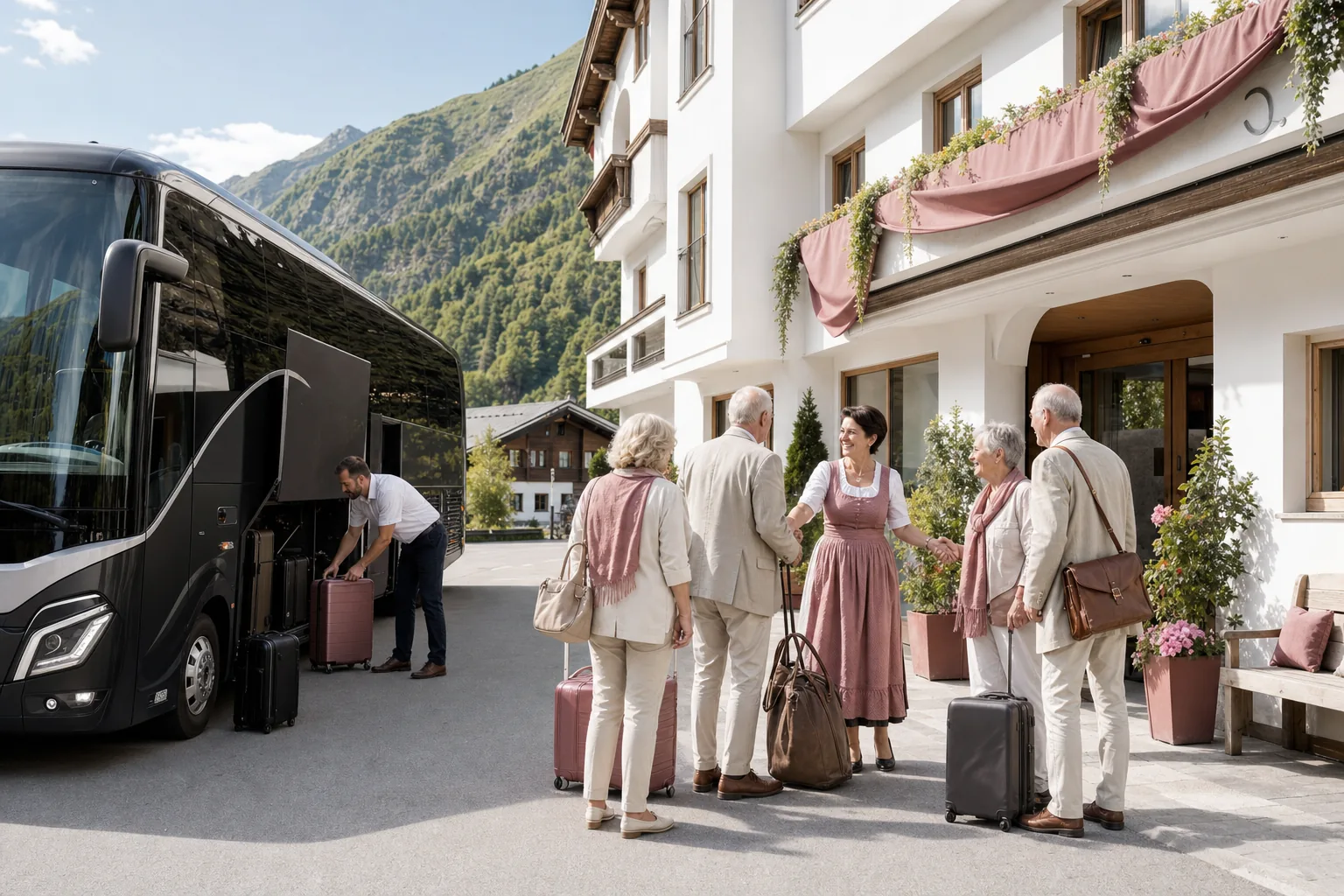
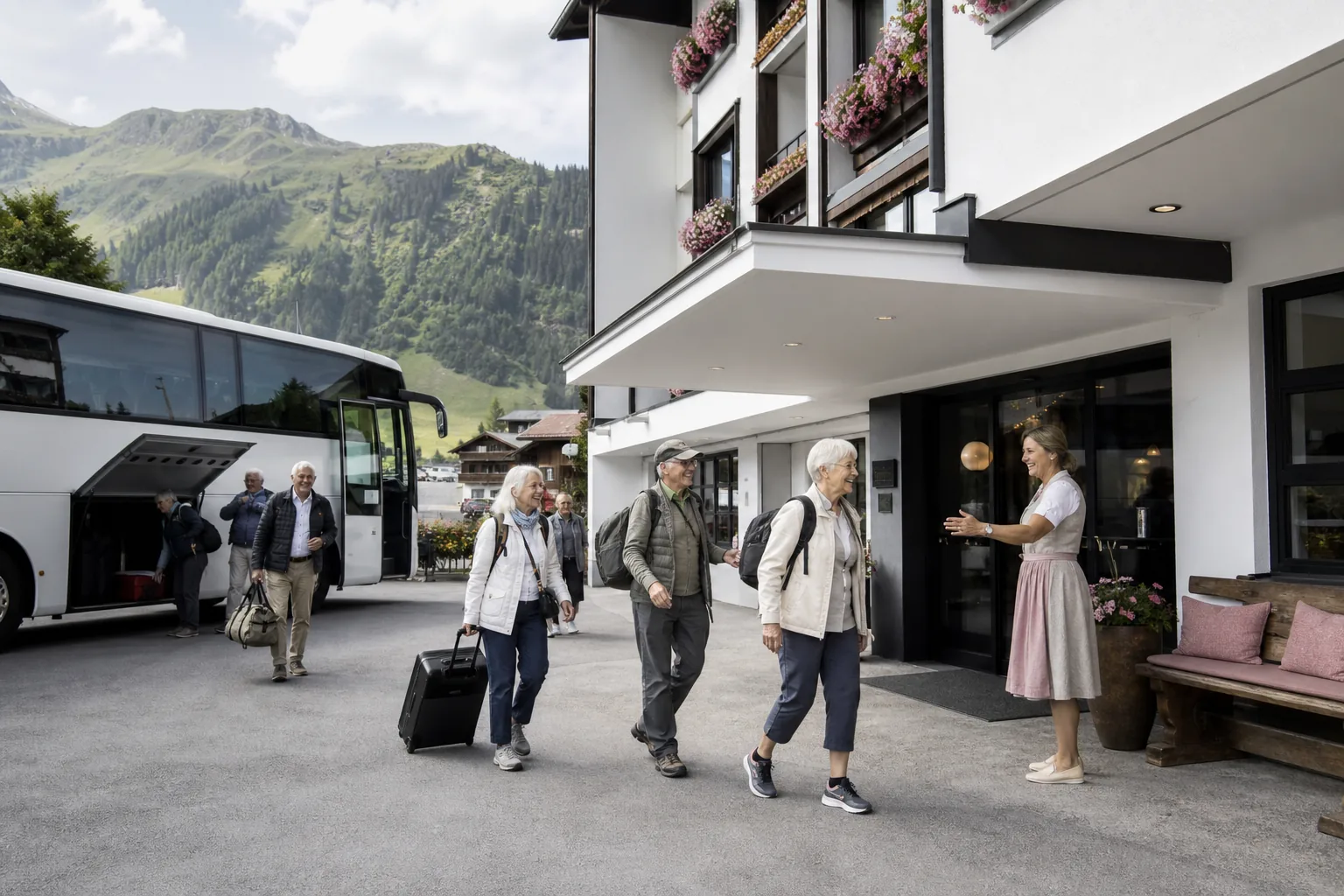
For tour managers, those small logistical details add up quickly. When a coach can unload directly outside the hotel instead of circling a crowded resort town for parking, the entire evening runs differently. Guests settle in faster. Dinner starts on time. Drivers stay on schedule. Nobody feels rushed.
Travel agencies can maintain schedules more efficiently, guests experience less confusion during arrivals, and tour managers spend less energy solving avoidable problems. The difference becomes especially noticeable for senior groups, where smooth arrivals and minimal walking distances improve the overall guest experience considerably.
Hotels associated with Arlbergreisen position themselves specifically around these practical needs. Their group-focused structure supports travel agencies looking for reliable partnerships instead of one-time bookings.
Many agencies now structure multi-day coach tours around regional Alpine routes similar to planning a 5 day coach itinerary through the Austrian Tyrol, particularly for senior groups looking for shorter transfer times and scenic daytime excursions.
Scenic Excursions Keep Coach Travelers Engaged Throughout the Trip
One of the reasons coach travelers rarely get bored in the Alps is simple: the landscape never stays the same for very long. A group might spend the morning driving through narrow Tyrolean valleys, stop for lunch beside a lake near the German border, then arrive in St. Anton later that afternoon with snow still visible on the higher peaks, even in July.
Unlike many beach destinations where travelers remain concentrated in one resort area, alpine tours allow coach groups to experience villages, mountain passes, lakes, panoramic roads, cable cars, and cultural attractions within relatively short driving distances. This keeps travelers engaged throughout the journey.
In the Austrian Alps, coach groups often combine multiple excursion styles within a single itinerary. Guests may spend one day exploring scenic villages and another enjoying panoramic drives through Tyrol or nearby regions of Switzerland and Germany. That variety helps prevent itinerary fatigue.
Older travelers especially appreciate tours that balance movement with relaxation. Scenic coach routes allow guests to enjoy dramatic landscapes without demanding physical activity throughout the day.
Photography also plays a surprisingly important role. Travelers frequently choose mountains in summer because alpine scenery creates memorable travel experiences that feel visually distinct from standard city tourism.
That memory tends to stay with travelers long after the tour ends. Coach operators see it constantly. Guests return home talking less about hotel lobbies and more about the quiet roads through Tyrol, the mountain air during lunch stops, or the moment the clouds opened above the Arlberg Pass halfway through the journey.
Travel agencies searching for excursion inspiration can explore regional sightseeing ideas through these summer group package excursions in St. Anton.
| Popular Alpine Excursions | Why Coach Groups Enjoy Them |
| Scenic mountain drives | Comfortable sightseeing |
| Alpine villages | Local culture and photography |
| Lake visits | Relaxed daytime excursions |
| Cable car viewpoints | Accessible panoramic scenery |
| Cultural stops | Balanced itinerary pacing |
| Border-region day trips | Multi-country experiences |

Group-Friendly Hotels Are Easier to Find in Mountain Regions
Many mountain destinations have built their tourism infrastructure around group travel for decades. That history matters.
Hotels in alpine regions often understand the operational requirements of coach groups far better than standard leisure hotels in large tourist cities. Staff members know how to coordinate meal times for groups, handle flexible rooming lists, manage luggage logistics, and support itinerary adjustments.
For travel agencies, those operational details reduce stress significantly. Group-oriented hotels also tend to provide larger dining areas, common meeting spaces, and half-board options that simplify planning for tour operators.
Arlbergreisen focuses heavily on this segment of the market. Their accommodation structure supports groups ranging from 20 to 70 guests through multiple housing options designed around coach tourism needs.
This approach creates flexibility for agencies organizing both small and medium-sized tours. Instead of adapting coach groups to hotels that primarily serve independent travelers, agencies can work with hospitality teams that understand the realities of organized tourism from the beginning.
Travel planners looking for flexible room layouts and group-focused accommodation can view full bus and vehicle details before finalising their group travel arrangements.
Why the Austrian Alps Continue to Grow in Popularity for Summer Coach Tours
Summer tourism in Alpine regions has evolved rapidly. For many years, the Austrian Alps were viewed mainly as winter destinations connected with skiing and snow sports. That perception has changed dramatically.
Today, mountain summer tourism attracts a growing number of travelers searching for nature, comfort, wellness, and quieter travel experiences. Austria benefits from several advantages.
The country maintains strong tourism infrastructure, excellent road networks, reliable hospitality standards, and a long tradition of family-run hotels. International travelers also associate Austria with safety, cleanliness, and organized tourism services. These factors create confidence among coach operators.
The Alps additionally offer strong geographic flexibility. Tour groups can explore multiple destinations while remaining within manageable driving distances. That improves itinerary quality without exhausting guests.
According to Statistik Austria, summer overnight stays across Alpine regions have continued to rise steadily in recent years, particularly among travelers from Germany, the Netherlands, Belgium, and the United Kingdom, markets that remain central to European coach tourism. This demand aligns closely with broader travel behavior shifts.
Travelers increasingly prioritize experience quality over crowded resort tourism. Many now prefer scenic travel routes, authentic local cuisine, fresh air, and meaningful regional experiences instead of fast-paced city schedules. That shift explains why the Alps important to European summer tourism today.
Mountain Destinations Support Active Leisure Tourism
Not every coach traveler wants a completely passive holiday. Many travelers today look for light activity options that support wellness without becoming physically demanding. This is one reason mountain summer destinations appeal to multiple generations at once.
The Austrian Alps provide excellent conditions for walking holidays, scenic hikes, trail running vacations, and relaxed outdoor movement.
Some travelers participate in running vacations or organized running holidays because the alpine terrain offers cleaner air and scenic training environments. Others simply enjoy daily walks through mountain villages or lakeside paths.
Not every guest wants the same pace during a summer coach holiday, especially across mixed-age groups. Some travelers wake early for a gentle walk before breakfast. Others prefer panoramic drives, long coffee stops in Alpine villages, or simply sitting outside after dinner while the evening air cools down across the valley. Mountain destinations handle those differences surprisingly well.
Guests can remain active without pressure. This trend has also contributed to the rise of wellness-oriented travel categories such as runcation tourism, where travelers combine relaxation with outdoor activity.
Even coach groups with mostly senior travelers often include guests interested in gentle hiking routes, short panoramic trails, or wellness-focused movement during the day. Compared with crowded urban tourism, mountain environments feel calmer and more restorative. That emotional difference plays a major role in repeat booking behavior.
Why St. Anton am Arlberg Works Especially Well for Coach Groups
St. Anton am Arlberg occupies a unique position within Austrian tourism. The region combines dramatic alpine scenery with reliable infrastructure, strong hospitality standards, and convenient access for international coach groups.
For tour operators, this balance is extremely valuable. The location allows agencies to build itineraries around scenic excursions, cultural visits, and relaxed alpine experiences without requiring constant hotel changes. St. Anton also works well because it remains attractive throughout multiple seasons.
Summer groups benefit from panoramic drives, fresh mountain air, village culture, and outdoor excursions. Winter and shoulder-season groups can additionally explore Advent travel programs and quieter alpine tourism experiences.
Arlbergreisen has positioned itself directly within this niche. Their business model focuses specifically on long-term partnerships with travel agencies and coach operators across Europe. Instead of competing as a generic leisure hotel, they concentrate on group accommodation, flexible capacity management, excursion-friendly logistics, and reliable coordination for coach tourism.
Travel agencies interested in regional group travel planning can review available group travel packages in the Austrian Alps or learn more about the family-run hospitality philosophy behind Arlbergreisen.
| What Coach Operators Need | Why St. Anton Performs Well |
| Reliable road access | Strong alpine infrastructure |
| Flexible accommodation | Group-oriented hotels |
| Scenic variety | Lakes, villages, mountain roads |
| Comfortable climate | Cooler summer temperatures |
| Excursion potential | Austria, Switzerland, and Germany access |
| Long-term partnerships | Established coach tourism experience |
What Travel Agencies Should Consider Before Booking a Mountain Group Tour
Successful coach tours rarely happen by accident. Travel agencies that consistently deliver strong group experiences usually focus heavily on operational details before confirming bookings.
Group size flexibility remains one of the most important factors. Hotels that can adapt room allocations for different group compositions simplify planning considerably.
Meal coordination also matters. Half-board options often reduce logistical pressure for agencies because dinner timing becomes more predictable during excursion-heavy itineraries.
Accessibility should receive careful attention as well. Our operator's checklist of hotel facilities that matter for senior groups covers lifts, entrance access, dining layout, and the other details worth confirming before a booking is signed. Senior groups may require elevators, shorter walking distances, or easier coach access. Mountain hotels designed specifically for group tourism usually understand these requirements better than standard city properties.
Excursion planning is another key consideration. Destinations with scenic variety within short driving distances help agencies create balanced itineraries without exhausting guests.
This is where the Arlberg region performs particularly well. Travel agencies considering future partnerships can directly contact the Arlbergreisen team to discuss seasonal availability, group packages, and long-term cooperation models.

Why This Travel Trend Will Continue to Grow
The movement toward alpine summer tourism does not appear temporary. Climate conditions, wellness-oriented travel behavior, and demographic changes all continue to support demand for mountain destinations.
A growing number of European travelers now prioritize comfort, cleaner environments, manageable activity levels, and meaningful travel experiences instead of crowded resort tourism.
Coach operators recognize this shift clearly. Why do coach groups prefer mountain destinations in summer? Because mountain travel solves several challenges at once. Travelers avoid excessive heat, enjoy better scenery, experience fresher air, and participate in more relaxed itineraries.
For agencies, the advantages extend even further. Reliable logistics, flexible hotels, scenic excursions, and long-term customer satisfaction help create stronger repeat business over time. That combination explains why destinations such as St. Anton am Arlberg continue to attract increasing attention from European coach tourism markets.
Travel agencies searching for reliable alpine group partnerships increasingly prioritize destinations that combine hospitality, organization, and scenic value.
And that is exactly where Arlbergreisen continues to position itself. Through family-run service, coach-focused accommodation solutions, excursion support, and flexible summer group programs, the company offers a practical and reliable base for operators building memorable Alpine travel experiences.