Before you sign a hotel group contract, ask about room capacity, room types, rates, deposits, cancellation terms, attrition, food and beverage, coach parking, meeting room access, cut-off dates, no-show rules, guest logistics, and what happens if the hotel cannot deliver what it promised. A good hotel contract should protect both sides. A weak one can leave your group with extra costs, poor rooms, bad timing, or one of those “we thought it was included” moments nobody wants.
For B2B coach tourism partners, this contract is more than paperwork. It is the working plan for the trip. It affects how guests arrive, where they sleep, when they eat, how the coach parks, how the tour leader manages the group, and whether the travel agency protects its margin.
In this article, we explore what questions should I ask a hotel before signing a group contract, especially for coach operators, tour planners, and travel agencies that need clear terms before guests arrive.
What questions should I ask a hotel before signing a group contract
If you’re asking, what questions should I ask a hotel before signing a group contract, start with the simple stuff that can cause the biggest mess later: how many rooms are really available, what the rate includes, when the release date happens, what fees apply if fewer guests travel, and whether all verbal promises will appear in writing.
Here’s the thing. A hotel may sound perfect during the sales call. The photos look good, the location works, and the rate seems fair. But a group contract is not a brochure. Many of these terms only make sense once you understand how hotel allotment agreements actually work, since the release date, room block size, and attrition penalties all flow directly from that structure. It is the document that decides who pays, what gets delivered, and what happens when plans change.
That matters even more for coach groups, senior travel groups, clubs, and tour operators. One small mistake can affect 40, 50, or 70 people at once. For a travel agency, it can also affect future bookings, guest trust, and profit margins.
Before signing, your goal is simple: remove doubt. The contract should answer the questions a tour leader would ask on arrival, the finance team would ask before payment, and the guests would ask once they reach the hotel.
A reliable group hotel should make planning easier, not harder. For example, ArlbergReisen’s group offers focus on coach-friendly stays, group meals, flexible room options, and organized travel support in St. Anton am Arlberg. That is the kind of practical detail a planner should look for before signing, not after the coach has already arrived.
Use this quick checklist before you move into detailed hotel negotiations. It gives tour planners a simple way to spot risks early and compare one hotel contract with another.
| Contract area | Question to ask before signing | Why it matters |
| Room block | How many rooms are confirmed, and which categories are included? | Prevents confusion over singles, twins, doubles, and upgrades |
| Group size | Can the hotel comfortably host our full group size? | Protects the guest experience and avoids last-minute room splits |
| Rate | What exactly is included in the group rate? | Helps avoid hidden extras on the final invoice |
| Food and beverage | Are breakfast, dinner, drinks, and dietary needs clearly covered? | Keeps meal service smooth for senior and leisure groups |
| Event date | Which dates control deposits, cut-offs, cancellation, and final numbers? | Gives the planner a clear timeline |
| Attrition | What happens if fewer guests travel than expected? | Reduces financial risk |
| Coach parking | Is coach parking available directly at or near the hotel? | Protects arrival and departure flow |
| Meeting room | Is any common room or briefing space included? | Helps tour leaders manage the group |
| Excursions | Can the hotel support local guides, day trips, or weather alternatives? | Makes the travel program easier to sell and operate |
Room Block Terms and Group Accommodation Capacity
The first question is not “What is the price?” It is “Can this hotel actually house my group properly?”
Ask how many rooms are being held, what room types are included, and whether the hotel can keep the group together in the same house, wing, or floor. If the hotel uses more than one building, ask how guests will be split. That can be fine, but it should never be a surprise.
For a coach group, this question becomes even sharper. Will twin rooms be available? How many single rooms can the hotel offer? Are rooms suitable for older guests? Knowing which facilities senior coach groups actually need makes that last question far easier to ask with precision during contract talks. Are there stairs, lifts, narrow corridors, or long walking distances between the coach drop-off point and the rooms?
The Arlbergreisen works with group sizes of around 20–70 guests through its two-house setup, which gives coach operators more flexibility than a small hotel with limited room categories.
If your group has 50 guests but the hotel only has 22 suitable rooms, the contract needs to show exactly how room sharing will work. Don’t rely on “we’ll manage it.” That phrase has caused plenty of headaches.
A smart question is: “Can you send a rooming example for a group of our size before we sign?” This can help you see whether the hotel’s capacity works in the real world, not just on paper.
For planners comparing group accommodation in Austria, Arlberg Reisen’s room and equipment is useful because it shows how the accommodation is divided between the main hotel and the guesthouse. That type of detail helps a tour operator understand group fit before contract discussions begin.
| Contract area | Question to ask | Why it matters |
| Room block | How many rooms are contracted, and which categories are included? | Stops confusion over singles, twins, doubles, and upgrades |
| Group layout | Can the group stay together or near each other? | Improves guest comfort and coach-tour flow |
| Release terms | When do unused rooms go back to the hotel? | Protects the planner from late booking problems |
| Rooming list | When is the final rooming list due? | Prevents last-minute admin stress |
| Accessibility | Are rooms suitable for senior guests or limited mobility? | Reduces complaints and arrival-day problems |
Hotel Contract Costs, Deposits, and Hidden Fees
Once the room setup looks right, ask about the full cost. Not the pretty rate on the first proposal. The full cost.
Ask what the group rate includes. Does it include breakfast, dinner, taxes, Wi-Fi, coach parking, local fees, service charges, porterage, luggage handling, and meeting room use? If something is not named, assume it may cost extra.
This is where many hotel negotiations go sideways. A low room rate can look attractive, but the final invoice may tell another story. A hotel contract should name the rate, what is included, what is excluded, payment dates, deposit amounts, refund rules, and any extra costs that might apply.
Price clarity is no longer just a nice-to-have. The U.S. Federal Trade Commission’s 2025 rule on unfair or deceptive fees requires covered lodging businesses to tell customers the whole truth upfront about total prices and fees. Even when a European B2B group contract follows different rules, the principle is still useful: planners should ask for the real total before they commit.
Ask the hotel this direct question: “Can you show the total estimated cost for the whole group, including all mandatory charges?” It may sound basic. Good. Basic questions often save the most money.
For coach operators, also ask whether the hotel issues one group invoice or separate guest invoices. A clean invoice process can save time for the agency, the tour leader, and the hotel team.

Food and Beverage, Half-Board, and Menu Flexibility
For coach groups, food and beverage is not a small detail. It can shape the whole guest experience. Ask what meals are included, what times meals are served, whether menus can suit senior guests, and whether the kitchen can handle dietary requests. Ask whether half-board means a fixed menu, buffet, three-course dinner, or another format. Also ask what happens if the group arrives late after an excursion.
This is especially important for summer alpine tours, where guests may spend the day on scenic routes, hikes, or cultural visits. A warm dinner, clear seating plan, and smooth service can make the hotel feel organized and welcoming. Poor meal planning, well, that can turn even a beautiful destination into a complaint file.
Before signing, ask for sample menus. Ask whether drinks are included or billed separately. Ask whether the hotel can provide early breakfast for departure days. If the group includes older travelers, ask whether lighter options are available.
For Arlbergreisen, food is a strong brand asset. The hotel highlights regional products, Tyrolean dishes, group dinners, and personal hospitality through its culinary offer. It is a trust signal for tour operators who need dependable group service.
A useful contract question is this: “Can the menu, meal time, and service format be confirmed before arrival?” For senior and leisure coach groups, that small detail can make the whole stay feel calmer.
Event Date, Cut-Off Date, and Cancellation Terms
The event date is not the only date that matters. A contract hotel agreement has several dates that can affect cost and control.
Ask when the contract must be signed, when the deposit is due, when the rooming list is due, when rooms are released, when cancellation penalties start, and when final guest numbers must be confirmed.
The cut-off date deserves special care. This is the date when unclaimed rooms may be released back to the hotel. Our plain-English guide to how release dates work in allotment contracts explains what coach and group operators should watch for when negotiating this deadline.If the date is too early, your group may lose rooms before guests make final decisions. If it is too late, the hotel may push for stricter payment terms.
Ask whether the group rate stays available after the cut-off date if rooms remain unsold. This is a small clause with big value. It helps planners avoid the awkward situation where late guests must pay more, even though the hotel still has empty rooms.
Cancellation should also be staged, not vague. A fair hotel contract usually explains what happens if you cancel 180 days out, 90 days out, 30 days out, or close to arrival. If the hotel only gives one harsh penalty, negotiate. Once signed, your options shrink fast.
Jonathan T. Howe, founder and president of Howe & Hutton and longtime legal expert for Northstar Meetings Group, explains that event contract attrition and cancellation come down to risk management: planners have the chance during negotiation to decide how much risk they are willing to accept. In plain English, settle the numbers before the signature, not after the problem appears.
Attrition, No-Show, and Room Pickup Questions
Attrition is one of the most important hotel contract terms for group travel. It means the number of rooms your group can reduce without a penalty. If your contract says you must fill 90% of the room block, and you fill only 75%, you may owe the hotel money for the shortfall.
So ask: “What is the attrition allowance?” Then ask the better question: “How is attrition calculated?”
Some contracts calculate pickup across the total stay. Others calculate it night by night. Night-by-night attrition can be riskier because one weak night may trigger fees even if the group performs well overall. Attrition sits alongside the release date clause, so it also pays to understand what happens if you miss the allotment release date and unsold rooms return to the hotel.
Ask whether rooms booked outside the block still count toward your pickup. For example, if a guest books the same hotel online instead of through your group code, will that room count toward your contract? It should, if you can prove the guest belongs to the group.
Also ask what happens with no-shows, early departures, and late cancellations by individual guests. These terms should be clear, especially for senior travel groups where health or mobility issues may change attendance close to the trip.
For B2B coach tourism partners, attrition should never be treated as a minor clause. It can decide whether a tour remains profitable after a few guests cancel.
| Risk clause | What to ask before signing | Better contract position |
| Attrition | Is pickup measured by total room nights or by each night? | Total-stay pickup is often safer |
| No-shows | Who pays if a guest does not arrive? | Clear guest-level rule |
| Outside bookings | Do rooms booked outside the block count? | Yes, if linked to the group |
| Resold rooms | Are resold rooms credited against penalties? | Yes, hotel should reduce damages |
| Early departure | Are guests charged if they leave early? | Rule should be written and fair |
Meeting Room, Common Space, and On-Site Group Facilities
Not every group needs a formal meeting room, but many need some kind of shared space. Coach groups may need a room for welcome drinks, briefings, evening chats, luggage organisation, or tour leader updates.
Ask whether common rooms are included. Ask how many people they hold, what setup is possible, and whether they are private. If your group needs a screen, microphone, projector, or extra power, ask if that is included or billed separately.
If a hotel promises a meeting room, the contract should name it. It should also mention layout, access hours, room rental, setup fees, and whether another group can use nearby space at the same time.
This may feel picky. It isn’t. If your tour leader needs to brief 55 guests about the next day’s excursion, a cramped corner near reception won’t do.
For groups in St. Anton, it helps to work with a property that understands group flow, not just overnight stays. The right hotel contract should cover where guests gather, where the coach loads, where meals happen, and how the team handles schedule changes.
A good question to ask is: “Where will our group gather on the first evening, and is that space included in the contract?” That one line can prevent confusion after arrival.

Coach Parking, Arrival Flow, and Guest Logistics
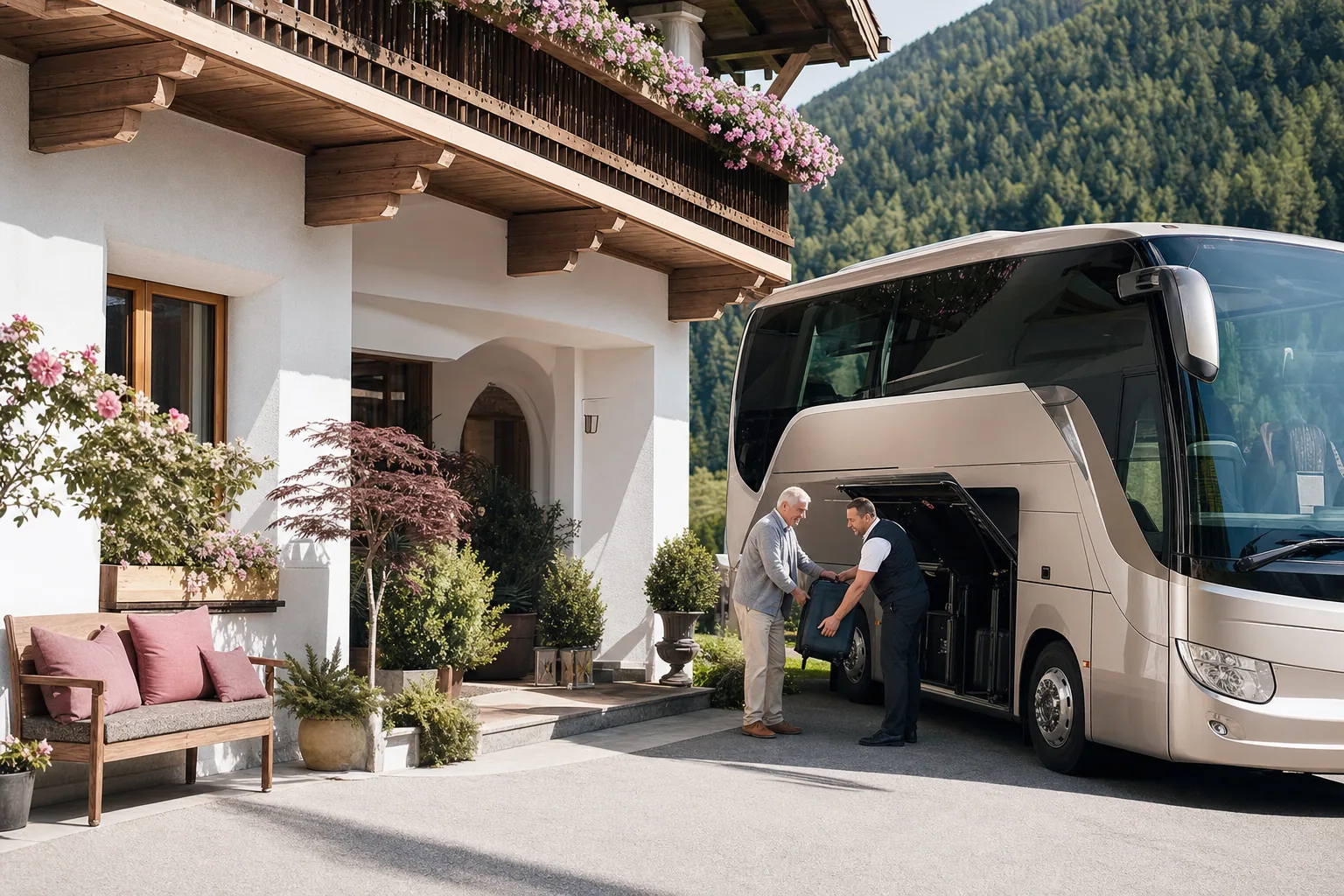
For a coach operator, parking is not a bonus. It is a dealmaker. Ask whether coach parking is directly at the hotel, whether it is free, whether reservations are needed, and whether the coach can stay overnight. Ask about loading and unloading. Ask whether the road is suitable for large coaches in winter and summer. Ask whether there are time restrictions.
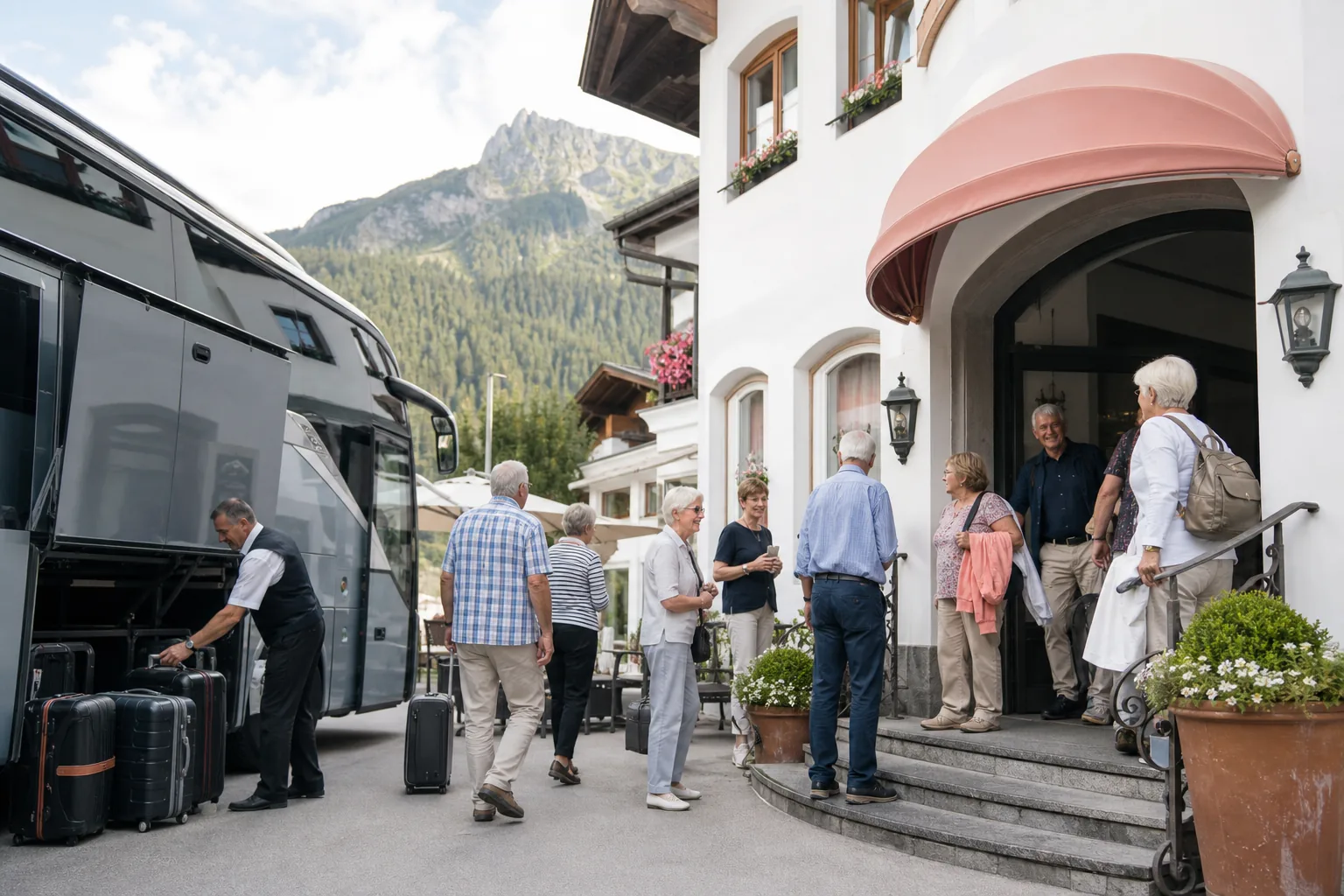
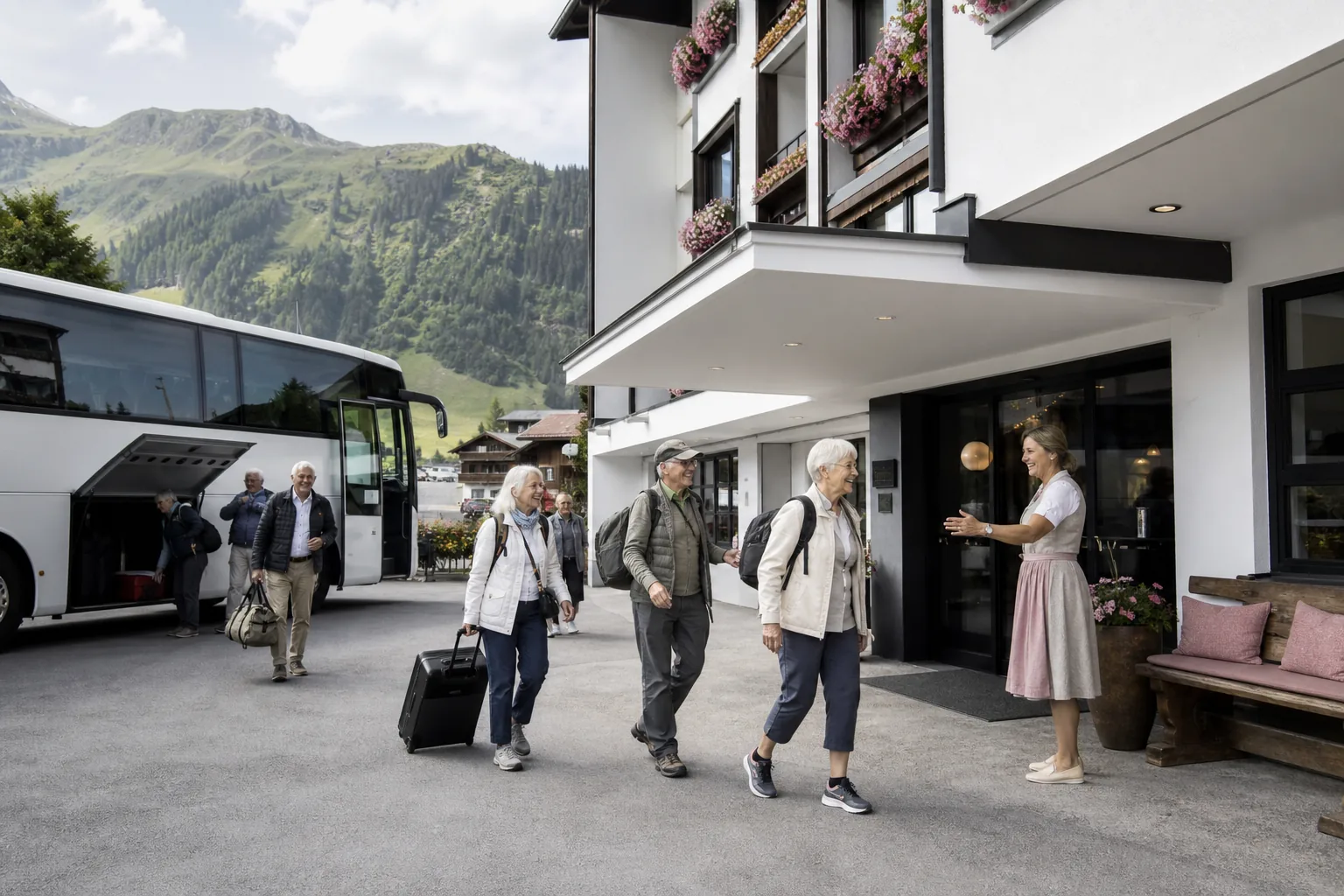
Also ask what happens when the group arrives. Who welcomes them? Can luggage be stored? Is there a quick check-in method? Can keys be prepared in advance? Will the tour leader receive one group invoice or separate invoices?
These details matter because the first 20 minutes at a hotel can set the mood for the whole stay. After a long drive, guests want rooms, restrooms, and a calm welcome. They don’t want a queue, missing keys, or a driver trying to find parking down the road.
Arlbergreisen’s contact and hotel location details reinforce that the property is based in St. Anton am Arlberg and caters to group travel planners seeking a coach-friendly stay in Austria.
Excursions, Weather Plans, and Seasonal Group Programs
A group contract should not stop at rooms. If the hotel is part of a wider travel program, ask how it supports the itinerary.
Ask whether the hotel can help with local guides, half-day excursions, full-day trips, packed lunches, hiking ideas, weather alternatives, and timing around meals. For summer alpine travel, this can help the travel agency sell the trip with more confidence.
A hotel in a mountain destination should also understand weather. Ask what indoor or low-impact alternatives are available if a hike is not suitable. Ask whether senior guests can enjoy scenic routes without too much physical strain.
For tour operators that sell summer programs, this matters a lot. A hotel that can help with excursions gives the agency more than beds; it gives structure. Arlbergreisen already reflects this positioning through its activities and excursions in St. Anton, along with its approach to summer group packages with excursions.
If your audience includes older travelers, connect the contract topic to comfort and pacing. Summer alpine tours for senior travelers can support this angle naturally, especially when discussing meal times, room access, coach logistics, and easy excursion planning.
Contract Hotel Red Flags Before You Sign
Some hotel contract red flags are obvious. Others hide in friendly emails. Be careful if the hotel avoids written answers, refuses to define cancellation terms, gives only a total price without a cost breakdown, or says “don’t worry” when you ask about attrition. Be careful if the contract uses vague words such as “subject to availability” for things your group truly needs.
Also watch for a hotel that cannot confirm coach parking, meal times, room allocation, or group check-in flow. For individual guests, those gaps may be minor. For a group, they can cause chaos.
One red flag deserves special mention: verbal promises. If the sales manager says the meeting room is free, put it in the contract. If dinner time is flexible, put it in the contract. If the group rate stays valid after the cut-off date, put it in the contract. No written clause, no dependable protection.
A contract hotel should be able to put its promise on paper. If it cannot, that is not a small detail. It is a warning sign.
| Red flag | Why it is risky | What to request |
| “We’ll confirm later” | Key terms may change after signature | Written terms before signing |
| Vague food terms | Meal quality and cost may disappoint | Sample menus and included items |
| No coach parking detail | Arrival may become stressful | Written parking and unloading terms |
| Strict attrition | Lower guest count may cause fees | Fair slippage allowance |
| No relocation clause | Guests may be moved elsewhere | Written protection if hotel overbooks |

A Smarter Way to Choose a Group Hotel Partner
So, what questions should I ask a hotel before signing a group contract? Ask the questions that protect the guest experience and the tour operator’s margin at the same time.
Ask about the rooms. Ask about the money. Ask about food and beverage. Ask about the event date, cut-off date, cancellation terms, and attrition. Ask about coach parking, check-in flow, meeting room use, common areas, and excursions. Ask what happens if the hotel changes something after signing.
For coach groups, the best hotel is not always the one with the lowest rate. It is the one that understands group rhythm: arrival, meals, rooms, rest, excursions, departure, and the tour leader’s need for quick answers.
That is also why a specialised partner can make planning easier. Arlbergreisen focuses on coach and group travel in the Arlberg region, with accommodation, regional cuisine, group packages, and excursion support built around the needs of travel agencies and tour operators.
Before you sign, slow down. Ask the awkward questions. Get every promise in writing. A clear hotel contract may not be exciting, but it can save the trip, protect the budget, and keep guests happy from arrival to departure.
If you are planning a coach group stay in Austria, Arlbergreisen gives travel agencies a practical hotel partner for 20–70 guests, with coach-friendly accommodation, regional meals, direct parking support, and summer alpine packages in St. Anton am Arlberg. Send your enquiry through the Arlberg Reisen contact and start with clear terms before the group arrives.