
You contracted 30 rooms for a summer coach tour. Sales have lagged the brochure’s promise, the release date is a week out, and half the block is still open. What happens when that date passes?
It comes down to one thing: which type of allotment you signed. Under one contract, the unsold rooms slip back to the hotel and you owe nothing. Under another, you face an attrition charge or a forfeited deposit. The outcome isn’t decided by how the tour sells, it’s decided the day you sign. Here’s what’s at stake, what a release period really means, and how to structure terms so the release date passes without a bill.
What Is a Hotel Allotment (and How It Differs From a Room Block)?
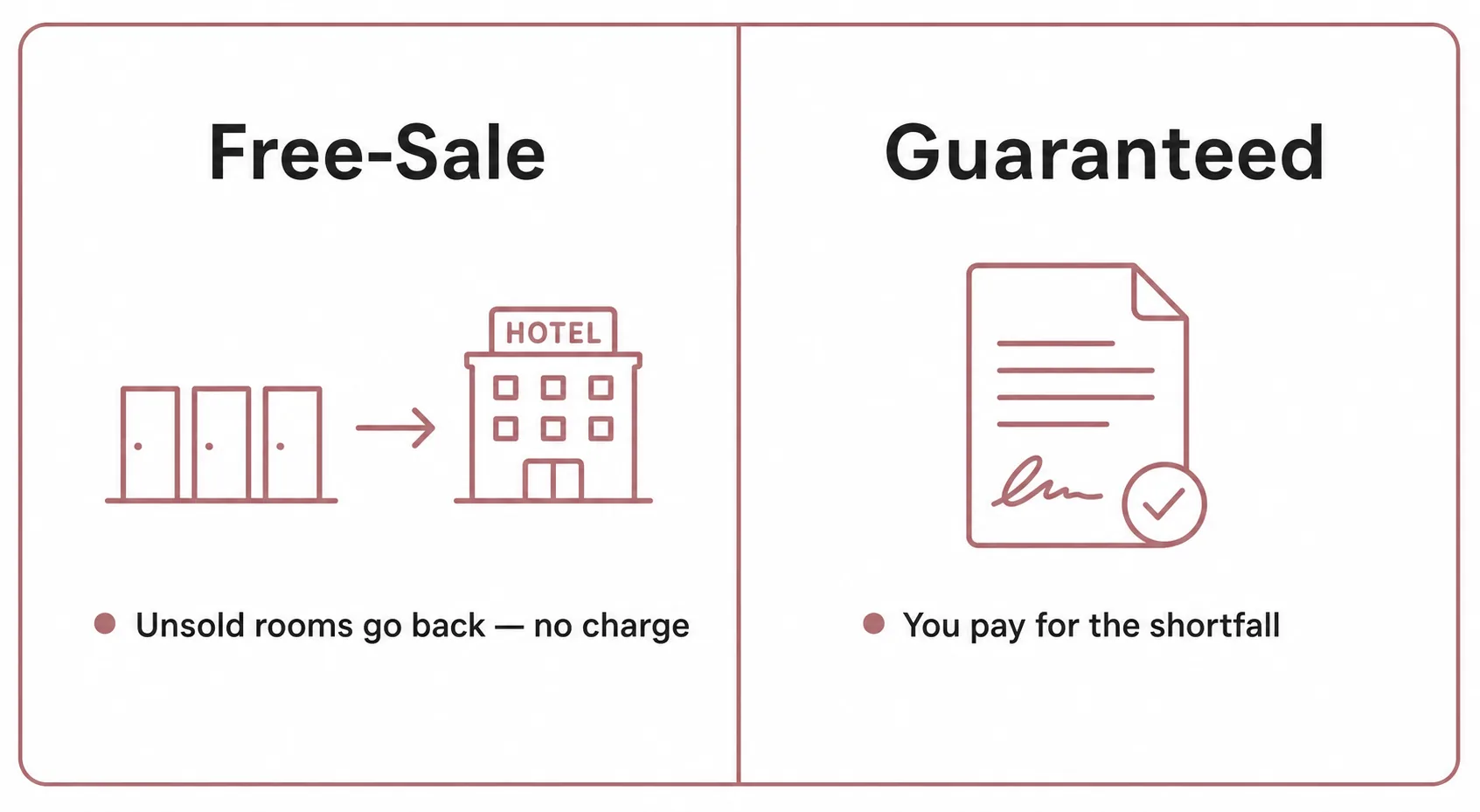
There are two broad types, and the difference is the whole story:
| Type | How it works | What happens at release |
|---|---|---|
| Free-sale / courtesy allotment | The hotel holds the rooms, but you’re under no obligation to sell them all. | Whatever you haven’t confirmed by the release date returns to the hotel’s inventory. No penalty, no charge for empty rooms. |
| Guaranteed / committed allotment | You commit to selling, or paying for, a set volume. | Fall short and the shortfall becomes your problem, through an attrition fee or a forfeited deposit. |
This is the B2B meaning of the term, a different animal from the one-off “room block” a couple reserves for a wedding. In group travel the volumes are larger, the contracts seasonal, and the terms negotiated between professionals. Tourism bodies treat allotment and contracting as core commercial vocabulary; the UN Tourism glossary of tourism terms is a neutral reference for how the industry defines these supply relationships.
What Is the Release Period for Hotels?
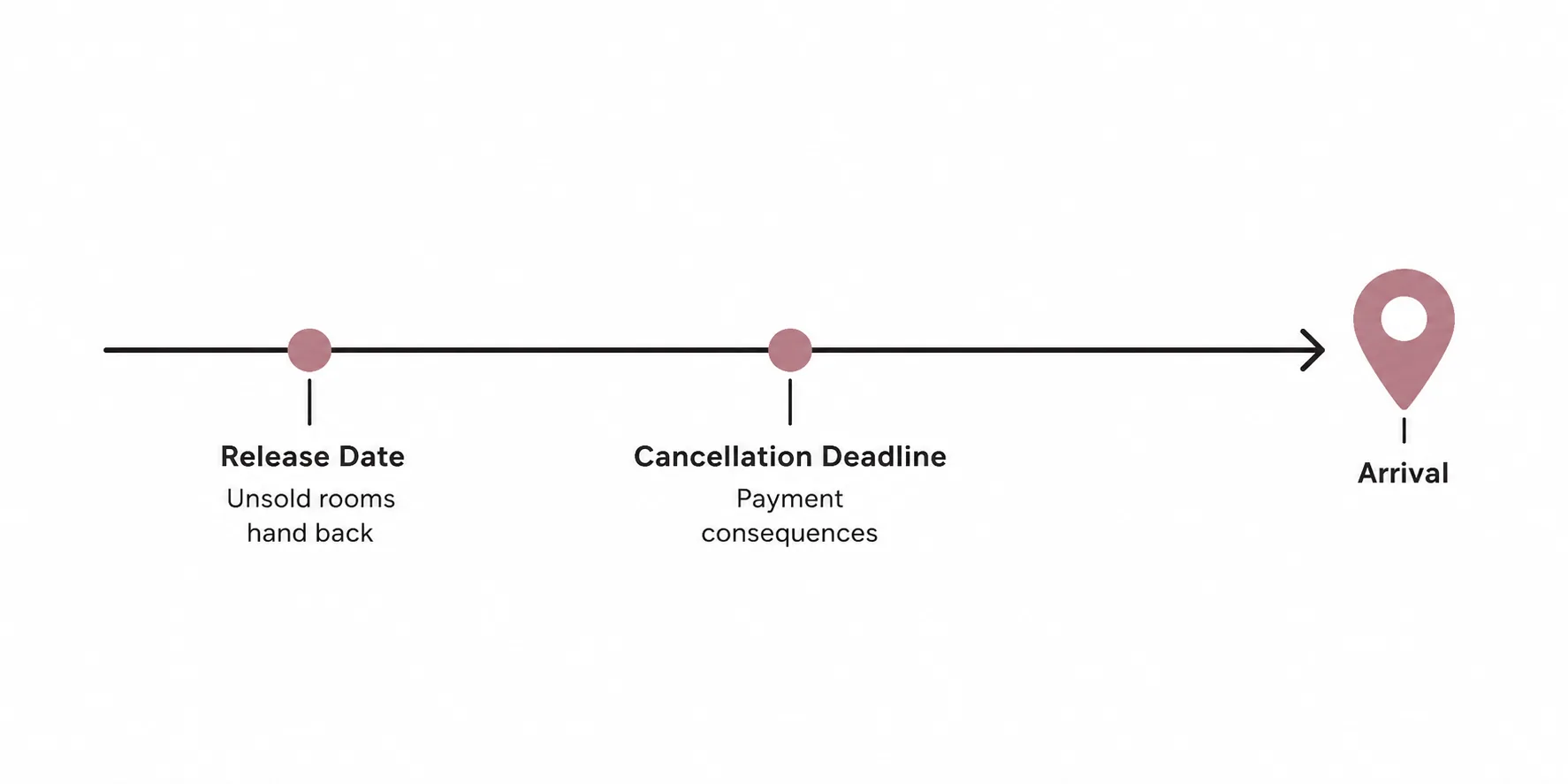
The release period, also called the release date or cut-off date, is the deadline by which you must confirm your final rooming list. Any rooms you haven’t sold by then are “released” back to the hotel to sell to other guests.
One distinction saves operators real money: the release date and the cancellation deadline aren’t always the same. The release date is when unsold rooms hand back. A separate cancellation or payment deadline governs the financial consequences on rooms you’ve already committed to. Read both, a generous release date paired with an aggressive cancellation clause can still leave you exposed.
Coach groups often cross borders into Austria, so it’s worth knowing that once you sell these rooms as part of an organised trip, EU consumer law may apply on top of your hotel contract. The EU Package Travel Directive (Directive (EU) 2015/2302) sets obligations toward travellers that sit alongside your supplier terms, and the plain-language summary on the European Commission’s Your Europe portal shows what those obligations look like in practice.
What Actually Happens When You Don’t Fill the Allotment by the Release Date?
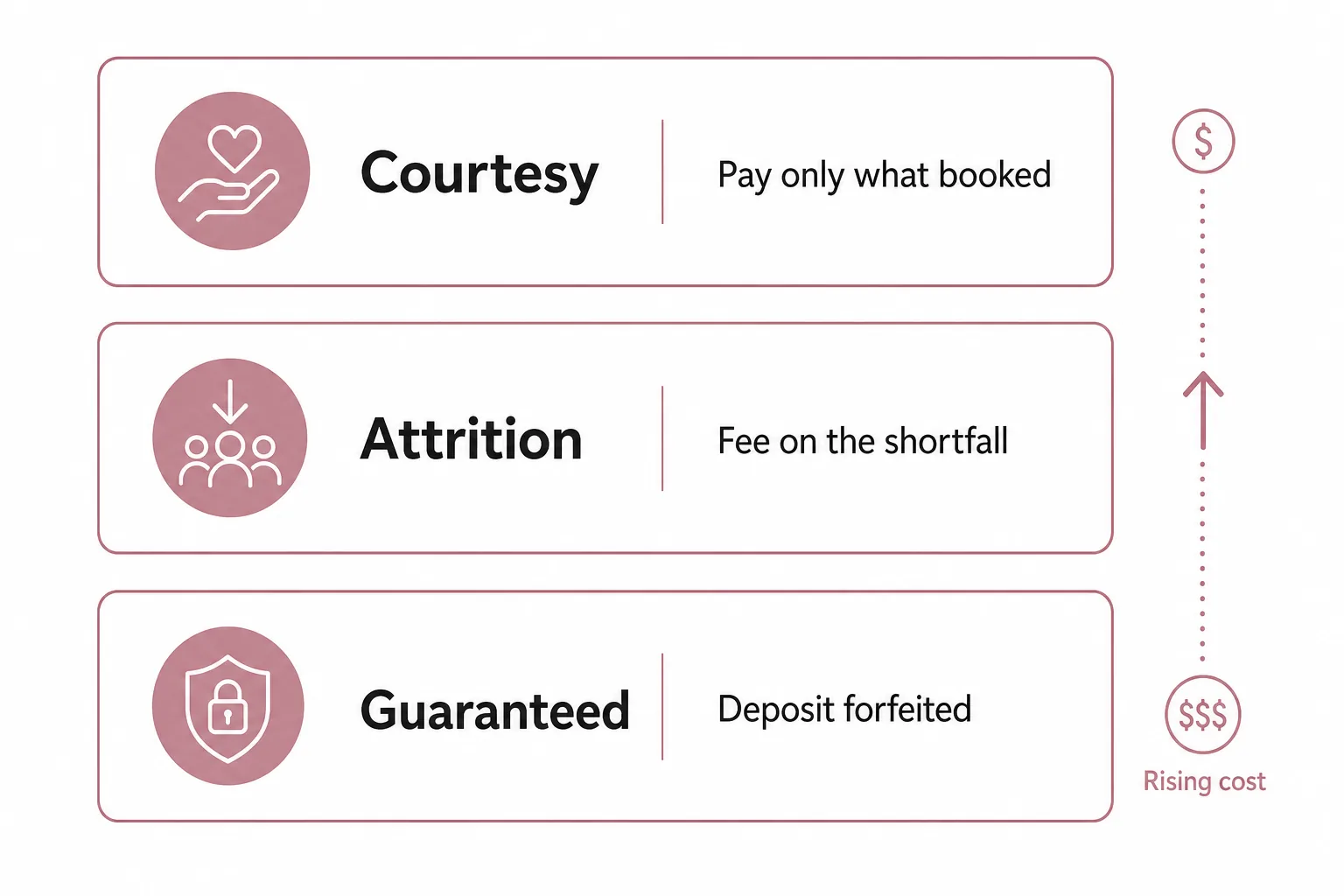
The money question, in three realistic outcomes. Which one you land in was decided the moment you signed.
Scenario 1: Courtesy / Free-Sale Allotment
The good outcome. The rooms you didn’t sell release back to the hotel, and that’s the end of it. You pay for what your passengers actually booked and nothing more, no charge for empty inventory, because you never guaranteed it. For tours with genuinely uncertain demand, this is the structure you want: the hotel carries the occupancy risk, not you.
Scenario 2: Committed Allotment With an Attrition Clause
Attrition is the industry term for the gap between what you committed to and what you filled. With an attrition clause, you agreed to sell a minimum share of the block, say most of it, and falling below that line means paying a fee on the shortfall. Book 20 of 30 committed rooms and you may owe on some or all of the missing 10, depending on how the clause is drafted. These clauses aren’t unfair in themselves; they’re how a hotel protects itself against holding rooms it can no longer resell. But they turn slow sales into a direct cost, so know the threshold and the formula before you sign.
Scenario 3: Guaranteed Rooms or Non-Refundable Deposit
The highest exposure. Here you’ve guaranteed the rooms outright, often backed by a deposit that’s non-refundable past a set date. Rooms go unsold, the deposit is forfeited, and stricter contracts keep you liable for the full committed value. This can make sense when demand is certain, a fully subscribed tour with a waiting list, but on speculative dates it’s where operators get hurt.
The release date doesn’t create your risk, it reveals it.
The pattern is the same across all three: the release date doesn’t create your risk, it reveals it. Your exposure was set in the contract long before a single room went unsold.
Red Flags to Watch for in an Allotment Agreement

Screen the contract against this checklist before you sign. Any one of these deserves a conversation with the hotel’s group desk:
- Early or aggressive cut-off dates. A release date that lands well before your passengers typically book forces you to commit before you have the sales to justify it.
- Steep attrition percentages. A clause requiring you to fill nearly the whole block, with a high fee on any shortfall, transfers the hotel’s occupancy risk onto you.
- Large non-refundable deposits. Big money down, forfeited early, is the fastest route to a painful loss on a tour that underperforms.
- Vague or missing release terms. If the contract doesn’t spell out when rooms release and what happens to them, you’re negotiating in the dark.
- Rigid room-type commitments. Being locked into a fixed mix of singles, doubles and twins that doesn’t match how groups book leaves you paying for rooms you can’t sell.
A clean agreement states the release date plainly, keeps deposits proportionate, and gives you room to adjust as the picture firms up. Consumer-protection frameworks lean the same way, clear, upfront terms as the baseline of fair dealing, a principle the Your Europe guidance on package travel rights reflects for the traveller-facing side of your business.
How to Protect Your Margin: Structuring a Low-Risk Allotment
You don’t have to accept a contract as written. The operators who sleep well the week before a release date are the ones who negotiated these terms:
- Push for generous release dates and realistic cut-offs. Move the deadline as close to real booking behaviour as the hotel will allow. Every extra week is more time to convert.
- Prefer courtesy allotments for uncertain demand. When you can’t yet predict how a route will sell, a free-sale structure keeps the downside off your books.
- Build in partial-release steps. Instead of one all-or-nothing cut-off, release the block in tranches, hand back a portion at 60 days, another at 30, keeping only what you’re confident of selling.
- Keep the hotel’s group desk in the loop. A hotel that knows your sales pace can often flex a date or rework the room mix. Silence until the deadline gets you nothing; an open line gets you options.
This is where the choice of hotel partner does more than any clause. Hospitality research has long linked flexible, well-managed group contracting to stable occupancy for both sides, the kind of subject taught at programmes like the Cornell School of Hotel Administration. A hotel that understands coach business will build terms that keep you whole, because your repeat bookings are worth more than one attrition fee.
Why Flexible Allotment Terms Matter More in the Summer Coach Season
Summer is the heart of the business, roughly 80% of our coach traffic, driven by multi-day tours and senior leisure groups on half-board packages. Demand is strong, and strong demand is exactly when planning security matters most. Groups on fixed itineraries need certainty months out, and so does the hotel. You square that with realistic release dates and terms that don’t punish the normal rhythm of how groups book.
That mutual planning security is the point. Fair cut-offs and no penalty-trap clauses give the operator predictable costs and the hotel predictable occupancy, the contracted, recurring summer business both sides can build a season around. It’s the difference between chasing every booking and running a stable pipeline.
The same flexibility carries into the quieter months. Our winter low-season programmes, Advent trips, cultural tours, pre- and post-season packages, give groups a peaceful, well-priced alternative when the calendar is open and excursions are easy to arrange. Different season, same principle: terms built around how groups actually travel.
On the ground, that flexibility is easy to feel. With two houses under the die Arlbergerin roof we comfortably host groups from 20 to 70 guests, coach parking sits directly in front of the hotel for effortless arrival and departure, and the service is individual rather than industrial, the family-run Austrian hospitality that keeps coach partners coming back. Clean mountain air and a genuine escape from the summer heat don’t hurt either.
Frequently asked questions
What is the release period for hotels?
What’s the difference between a release date and a cut-off date?
Do I always pay a penalty if I don’t fill my allotment?
Can a hotel be “sold out” but still have empty rooms?
How far in advance should coach operators contract an allotment for summer?
Arrange Flexible Allotment Terms for Your Next Coach Season
The release date is only a threat under the wrong contract. Get the structure right, realistic cut-offs, courtesy or partial-release terms, an open line to the hotel, and the deadline you were dreading passes without a bill attached.
If you organise coach groups or manage contracting for a travel agency, that’s exactly the kind of agreement we’re set up to write. Talk to us about flexible summer and winter allotment terms built around how your groups actually travel, get in touch at www.Arlbergreisen.com and lock in planning security for your next season.