
Group organisers need rooms locked in months ahead. Hotels need those rooms filled. A hotel allotment agreement solves both at once: it reserves a block of rooms for a partner to sell, at agreed rates, over a set period. Get the terms right and both sides plan with confidence instead of guessing.
What is a hotel allotment agreement?
A hotel allotment agreement is a contract in which a hotel holds a set block of rooms for a partner, a tour operator, travel agency or coach company, to sell at pre-negotiated rates over a defined period. The partner markets and sells those rooms as if they were their own inventory, while the hotel keeps them off general sale until an agreed cut-off.
The word “allotment” simply means the room quota itself: the number of rooms set aside under the deal. Worth clearing up, because the term travels. In banking or payroll, an allotment is a portion of money or salary earmarked for a purpose, nothing to do with hotels. In hospitality, it always means held room inventory. That distinction is the whole point of these contracts: they turn a vague “we’ll find you rooms” into a firm, documented commitment. Academic work on the cooperation contract in tourism supply chains treats tour operator–hotel allotment agreements as a formal supply relationship, not a casual arrangement, exactly how a serious group partner should view them.
Allotment vs. a standard group booking
People use the two interchangeably, but they behave differently. A standard group booking is a one-off: a named block of rooms for a specific trip on specific dates, confirmed once and settled once. An allotment is ongoing held inventory, a standing block the partner sells against across a season, with release terms that return unsold rooms to the hotel. A group booking answers “can we have 30 rooms for this tour?” An allotment answers “can we count on 30 rooms every week all summer?”
How does a hotel allotment agreement work?
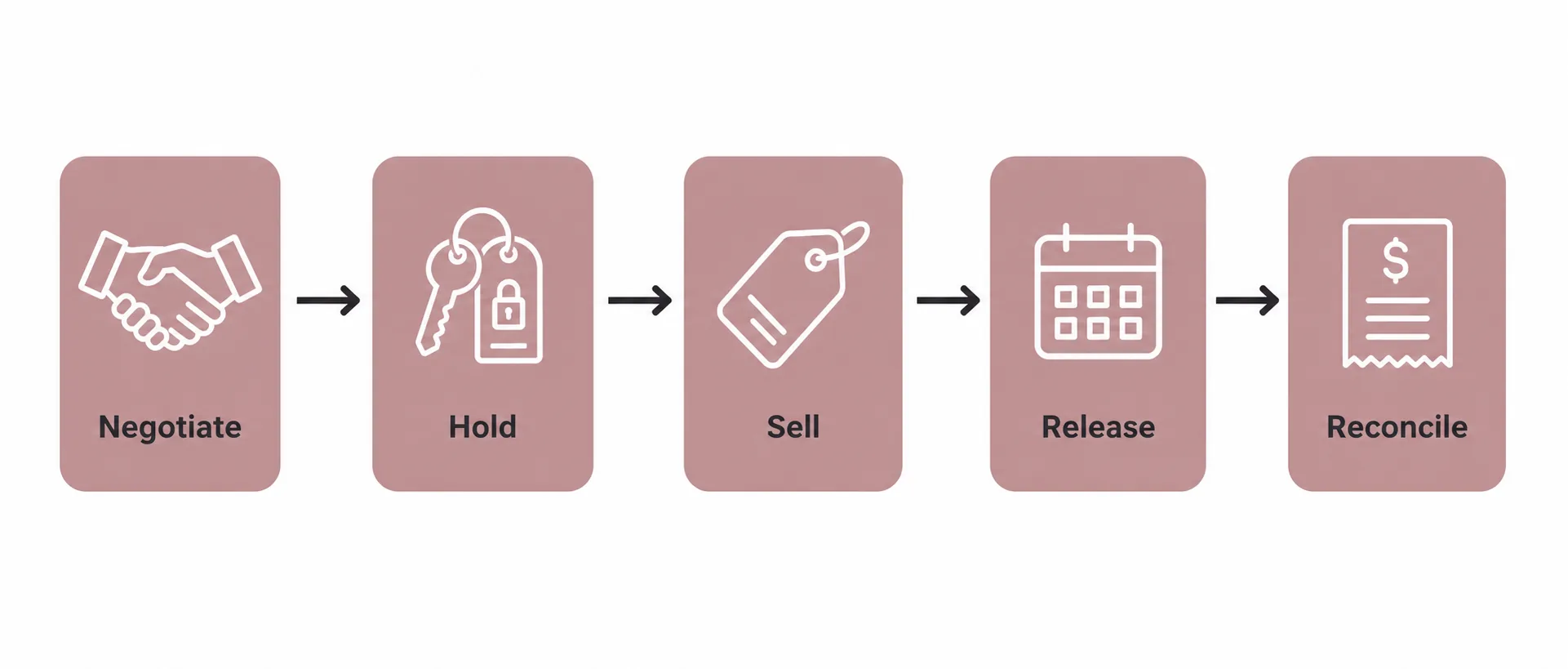
The mechanics follow a clear lifecycle:
- Negotiate. The hotel and partner agree the block size, the rate and the validity period.
- Hold. The hotel keeps those rooms reserved for the partner and off general sale.
- Sell. The partner markets the rooms to travellers and fills them.
- Release. By an agreed release date (or cut-off), any unsold rooms return to the hotel to sell elsewhere.
- Reconcile. Sold rooms are confirmed, invoiced and paid under the contract’s billing terms.
The release date is the mechanic most explanations skip, and it matters most. It’s the deadline by which the partner must either confirm bookings or hand rooms back, say, 21 or 14 days before arrival. Set it well and the hotel has enough notice to resell; set it poorly and someone carries empty rooms. These are structured agreements with defined obligations on both sides, the same way a form of hotel management agreement filed with the SEC spells out roles, terms and remedies rather than leaving them to goodwill.
Key terms every allotment contract includes
- Room quota, how many rooms, and of which type
- Rate, the pre-negotiated price per room or per package
- Validity dates, the season or window the block covers
- Release deadline, when unsold rooms revert to the hotel
- Payment terms, deposits, invoicing and settlement
- Cancellation and liability, who bears the risk on unsold or cancelled rooms
The two types of allotments: fixed vs. call-off
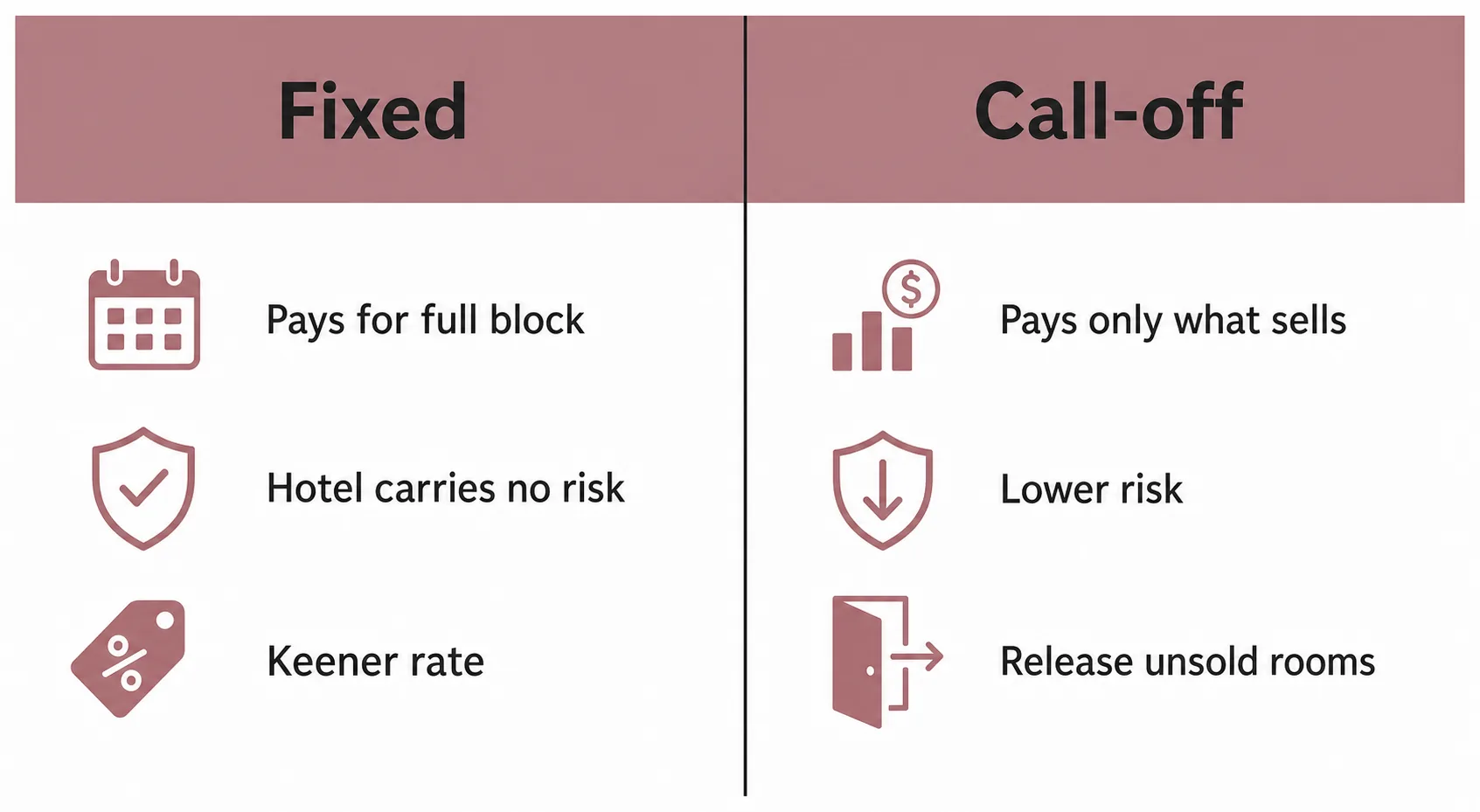
Almost every allotment falls into one of two structures.
| Fixed (guaranteed) allotment | Call-off (on-request or free-sale) allotment | |
|---|---|---|
| How it works | The partner commits to the block and pays for it whether or not every room sells. | The partner sells against the held rooms and releases whatever hasn’t sold by the cut-off. |
| Who carries the risk | The hotel carries no risk; the partner accepts it. | Risk is far lower because the partner only pays for what it fills. |
| Trade-off | In exchange, the partner gets guaranteed availability and, usually, a keener rate. | Terms are typically a touch less aggressive than a fully committed block. |
For coach and group travel, a call-off allotment with sensible release terms is usually the sweet spot. It keeps rooms guaranteed through the selling window without forcing the operator to pre-pay for seats they may not fill.
Why allotment agreements matter: benefits for both sides

Allotments work because both parties get something they genuinely need.
For the hotel: predictable occupancy, real planning security and far less exposure to unsold rooms. A contracted block turns a season of uncertainty into a base of confirmed business the team can staff, cater and schedule around.
For the operator or agency: guaranteed availability at a fixed, favourable rate, and the confidence to sell forward without checking room-by-room every time an enquiry lands.
That second point is where a good partnership compounds. When a coach operator knows the rooms are there season after season, and the hotel knows those groups are coming, you get what both sides actually want: stable partnerships, occupancy you can forecast, and a recurring pipeline of summer bookings that make planning reliable rather than hopeful.
An allotment is only as good as its terms.
Getting allotment terms right: release dates and best practice

A few practical habits keep them working:
- Set realistic release windows. Match the cut-off to how far ahead your groups actually book. Too tight and the hotel can’t resell; too loose and rooms sit idle. Research on contractual completeness in allotment agreements finds that spelling out these contingencies up front prevents most disputes later.
- Keep availability visible and current. Both sides should always know what’s sold and what’s still open. Surprises at the cut-off are almost always an information problem.
- Review block size against real pickup. If a partner consistently fills 25 of 30 held rooms, adjust the block. Right-sizing keeps the deal profitable for the hotel and credible for the operator.
Allotments for coach and group travel
Few segments benefit from allotments as much as multi-day coach tourism. A senior leisure group of 20 to 70 guests, booked as a half-board package with excursions built in, needs certainty across a whole season, not a scramble for rooms each departure. A standing room block gives operators exactly that: guaranteed capacity, fixed rates and the freedom to programme trips well in advance.
The right partner hotel makes the arrangement effortless. A family-run house with the flexibility to take a full coach group, coach parking directly out front for easy arrival and departure, and genuine Austrian hospitality removes the friction that makes group logistics hard. That’s the ground we’re built on at Arlbergreisen, two houses that comfortably host 20 to 70 guests, with the individual service groups remember.
Summer is the natural peak: fresh mountain air, cooler days and a welcome escape from the heat make it prime season for leisure coach groups, and it’s where most of our group business sits. The winter low season has its own appeal too, Advent trips, cultural tours and pre- and post-season packages offer a peaceful atmosphere and excellent value for operators building year-round programmes.
Frequently asked questions
What is an allotment in hotels?
What’s the difference between a fixed and a call-off allotment?
What is a room release date or cut-off?
Is an allotment the same as a group booking?
Does “allotment” mean the same thing in banking or on a payslip?
Ready to secure your group rooms?
If you organise coach or group travel, a reliable allotment partner turns a season of uncertainty into confirmed, forecastable business. Partner with Arlbergreisen for dependable summer allotments and well-organised winter low-season packages, and build the kind of recurring, planned occupancy both sides can count on.