A hotel can handle a coach group of 40 passengers only when it has the right mix of rooms, legal occupancy, coach access, meal capacity, luggage flow, common space, and staff used to group arrivals. A nice hotel is not always a coach-friendly hotel. For a travel agency, coach operator, club, sports team, or senior tour planner, the real test is simple: can the property move 40 people through arrival, dinner, breakfast, departure, and day trips without stress?
This is especially important for summer alpine tours, where coach operators often bring senior leisure groups to Austria for fresh air, scenic day trips, cooler mountain weather, and a calmer travel experience. A 40-passenger coach group is not huge, but it is too large for guesswork. The hotel must know how to handle the group before the coach rolls up.
In this article, we explore how travel agencies and coach operators can check whether a hotel is truly ready for a 40-passenger coach group.
How Do I Know If a Hotel Can Handle a Coach Group of 40 Passengers?
So, how do I know if a hotel can handle a coach group of 40 passengers? Start by asking for a written rooming plan, not just a total room count. A property may say it has enough beds, yet still fail if those beds are spread across awkward room types, upper floors without easy access, or rooms that breach hotel room occupancy limits.
As a practical rule, 40 passengers usually need around 20–30 rooms, depending on the number of singles, twins, doubles, guide rooms, and driver accommodation. Twenty couples may fit into 20 double rooms. A mixed senior coach group may need more rooms because solo travelers, friends, and guests with mobility needs often require different room types.
For a 40-person group, the first question is not “Do you have 40 beds?” The better question is, “Can you place 40 guests in suitable rooms for our passenger mix, with the right number of singles, twins, doubles, and driver accommodation?” That one question will save a fair bit of back-and-forth.
This matters because coach travel is not the same as normal leisure travel. A smaller group can often adjust on the fly. A full coach cannot. When 40 guests arrive together, the hotel must be ready for check-in, keys, luggage, dinner, breakfast, and departure timing. If one part breaks, the whole travel experience feels messy.
A credible hotel should answer that question with firm details: available room types, dinner capacity, coach parking, luggage handling, arrival timing, group rates, and one direct contact person.
Coach Bus Capacity, Charter Bus Seats, and Group Size Planning
Before you judge the hotel, confirm the coach itself. A 40-passenger group usually travels by full coach, mid-size coach, or charter bus. In the charter market, common coach bus capacity often ranges from around 40 to 60 passengers, while many full-size motorcoaches seat close to 56 passengers. That means a 40-person group may still travel with luggage, walking aids, guide materials, or spare seats for comfort.
This is why terms such as how many seats on a coach bus, how many people fit on a coach bus, how many people does a charter bus hold, and charter bus seating capacity matter during hotel selection. They are not just transport questions. They affect parking, access roads, turning space, luggage storage, driver rest, and timing at the hotel door.
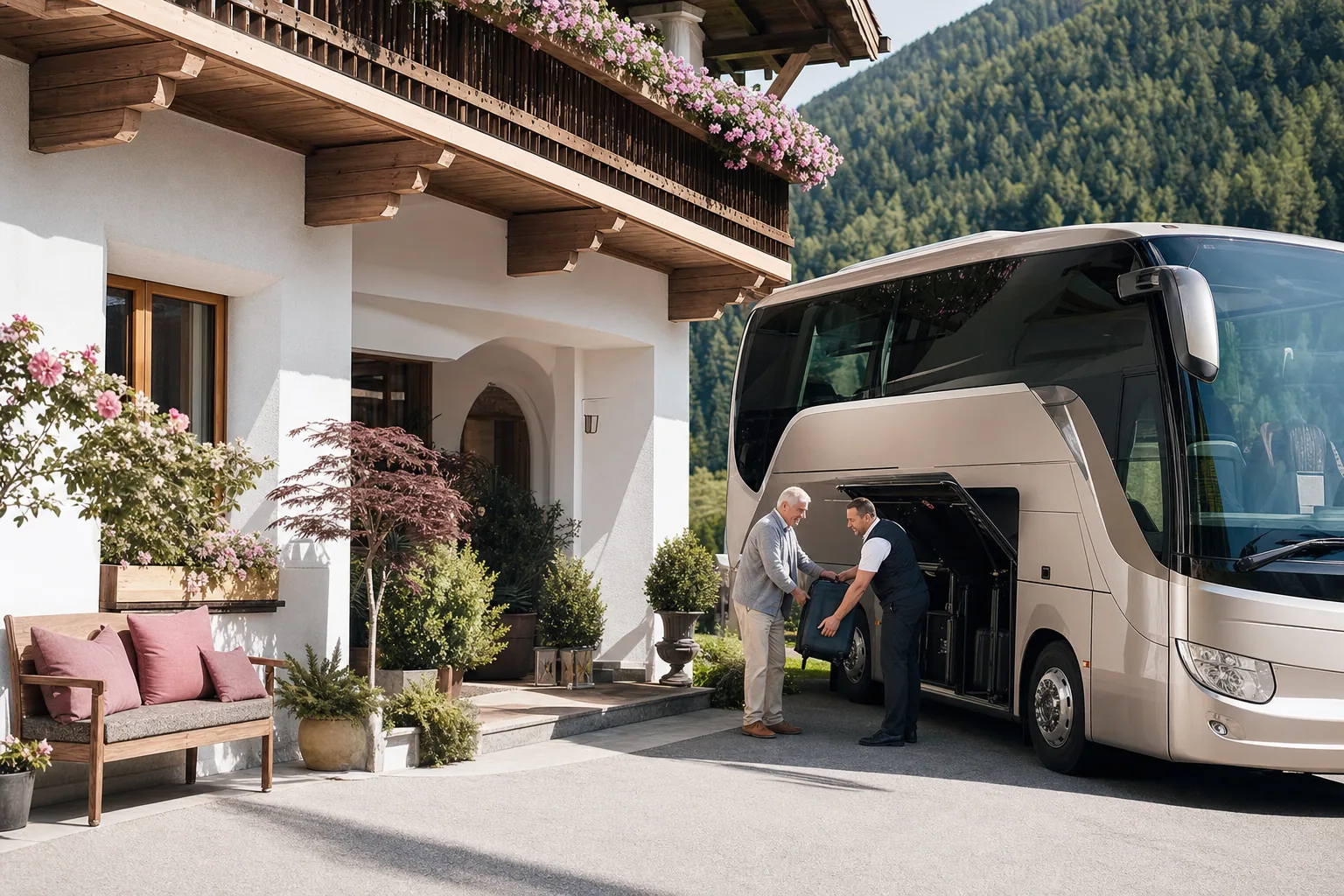
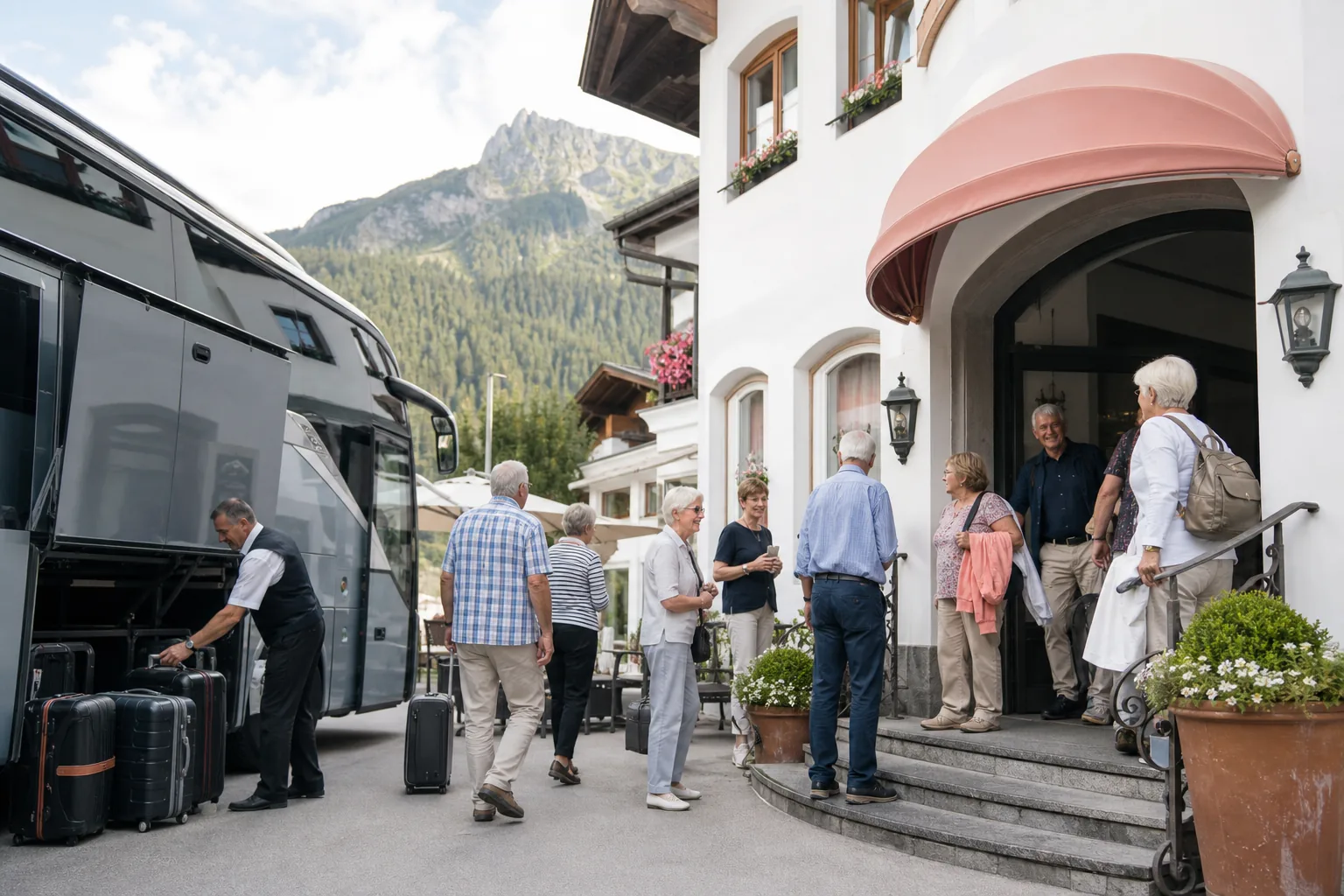
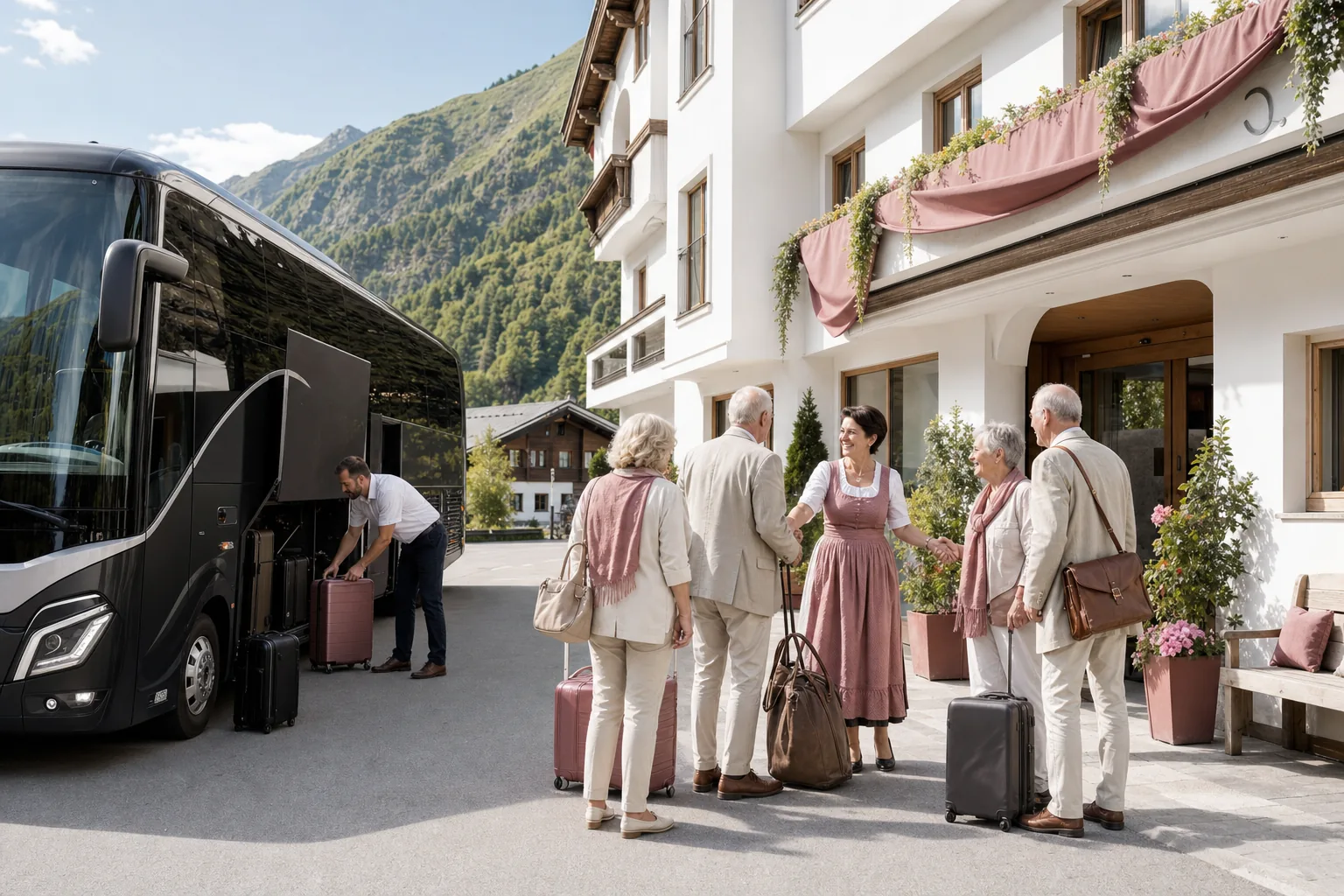
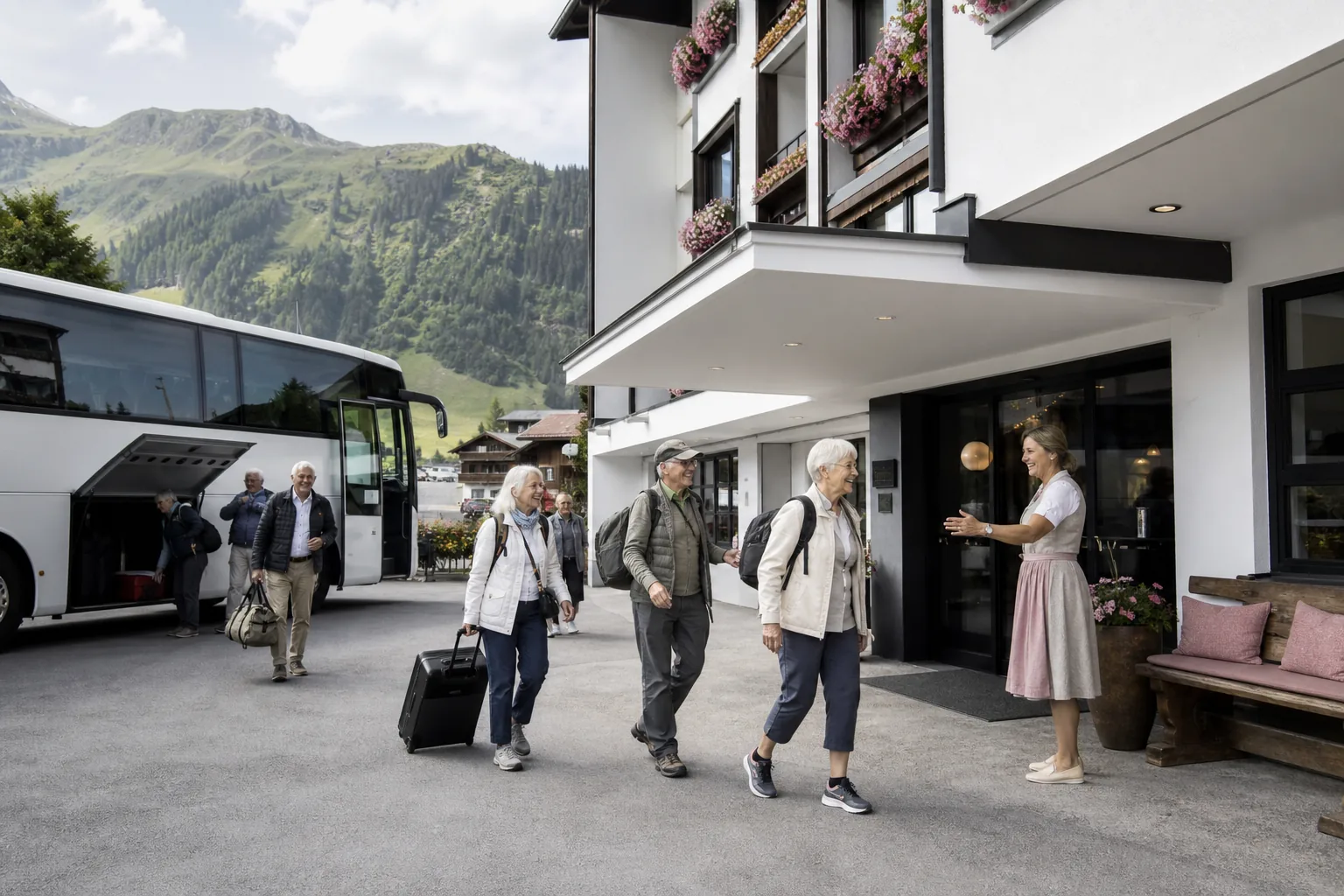
A 40-passenger coach group also needs more than comfortable seating during the journey. Guests need a hotel that can receive the coach without blocking traffic, rushing the driver, or forcing older travelers to walk too far with bags. For senior group travel, that detail is not small. It can make the first impression.
Here’s the thing: if the coach cannot stop safely near the entrance, the hotel is already struggling before guests reach reception.
| Planning factor | What to ask the hotel | Why it matters for 40 passengers |
| Coach access | Can a full coach stop directly at or near the hotel? | Avoids long walks and slow unloading |
| Coach parking | Is there dedicated coach parking on-site or nearby? | Prevents driver stress and parking delays |
| Rooming plan | Can you provide the exact room split before confirmation? | Stops surprises with singles, twins, and doubles |
| Meal service | Can 40 guests dine together at fixed times? | Keeps the itinerary on schedule |
| Luggage flow | Who handles bags, and where can they wait before check-in? | Reduces lobby crowding |
| Driver room | Can the driver stay at the property or nearby? | Supports legal rest and tour flow |
Room Count Is Not the Same as Hotel Capacity
A hotel may have enough rooms on paper and still be a poor fit. That’s why the phrase hotel capacity needs a closer look. For coach operators, capacity means the hotel can house the group in a way that matches real people, not just numbers on a spreadsheet.
A 40-passenger group might include 20 couples, which could work with 20 double rooms. Easy enough. But many coach tours include friends, solo travelers, guides, and guests who prefer twin rooms. Suddenly, the group may need 24, 26, or even 30 rooms. If several passengers request single rooms, the pressure rises again. That uncertainty is exactly why it helps to know how unfilled allotment rooms are released back to the hotel if your final numbers come in lower than the block you held. This is exactly why operators secure pre-booked room blocks through an allotment agreement, locking in a realistic mix of doubles, twins, and singles well before the season starts.
This is where hotel room occupancy matters. Hotels must follow room limits, safety policies, and local rules. A family room that sleeps four on a leisure booking may not suit four unrelated adult guests on a coach tour. Likewise, squeezing extra guests into rooms to “make it work” is not professional group planning.
The right hotel should be open about how many people can stay in a hotel room, how many people can be in a hotel room, and what its hotel maximum occupancy rules allow. Do hotels enforce maximum occupancy? Serious hotels do, because guest safety, comfort, insurance, and fire regulations are involved.
Mews explains group bookings clearly: “A group booking is when a hotel blocks and sells multiple rooms to one organization or coordinator for the same set of dates.” That definition matters because a coach group should be managed as one organized block, with one rooming list, one rate structure, and one billing process, not as 20 or 30 scattered reservations.
To avoid confusion later, ask the hotel for a sample rooming plan for 40 guests before you confirm the block. If they cannot provide one quickly, that is a warning sign.
The 40-Passenger Rooming Plan Test
The rooming plan is the heart of the booking. Without it, you are guessing. A proper plan should show room types, guest numbers per room, single supplement rules, guide and driver rooms, floor distribution, lift access if relevant, and any rooms with special access needs.
For a senior coach tour, the hotel should also understand that “available” does not always mean “suitable.” A room far from the main building may not work for a guest with limited mobility. A third-floor room without a lift may become a problem. Before you approve a rooming plan, it helps to run the property through a senior-friendly hotel facilities checklist so that “available” and “suitable” actually mean the same thing. A late dinner after a long day trip may irritate the group, even if the rooms are lovely.
| Group profile | Likely room need | Hotel suitability question |
| 20 couples | Around 20 double rooms | Can the hotel hold enough double rooms for the same dates? |
| Mixed senior group | Twin, double, and single rooms | Can the hotel balance singles and twins without awkward splits? |
| Sports team | Twin or multi-person rooms plus equipment space | Is there storage for gear and space for team meals? |
| Club or association | Flexible room types and common space | Can the group gather after dinner without disturbing others? |
| Tour with guide and driver | Guest rooms plus staff rooms | Are guide and driver rooms included in the offer? |
For a clean coach operation, get this in writing before deposit. The answer to how do I know if a hotel can handle a coach group of 40 passengers should never depend on a vague “we’ll manage.”

Coach Parking Is a Deal-Breaker, Not a Bonus
Coach parking is one of the easiest details to overlook and one of the hardest to fix later. A hotel may look perfect online, but if the coach has to park ten minutes away, load luggage on a narrow street, or reverse in a tight village lane, the operation becomes awkward fast.
A coach-friendly hotel should know the size of a coach bus, the basic coach bus dimensions, and whether a big coach bus can safely reach the entrance. It should also know where the driver can park after unloading, where the group boards for day trips, and whether early departures are possible without disturbing the hotel.
This is especially important in alpine towns, historic villages, and mountain destinations, where roads may be narrow, and parking is limited. For a summer coach itinerary in Austria or Tyrol, the hotel should make arrival simple because guests may already have spent several hours on the road.
Arlbergreisen is positioned around this exact problem. Its group accommodation explains that the hotel has coach-friendly organization, with rooms close to the coach parking area and flexible room use for groups. A travel planner can review the property’s rooms and equipment for group travel before asking for a rooming proposal.
Meals Can Make or Break a Coach Tour
A coach group of 40 passengers does not eat like 40 random hotel guests. They arrive together, sit down together, expect service at a set time, and often need to leave early the next day. That means the kitchen and dining room must be ready.
For senior leisure groups, food is often one of the strongest memories of the trip. A good hotel should be able to confirm breakfast timing, group dinner menus, dietary requests, water or drinks policy, packed lunch options, and the latest possible dinner time after excursions.
This can help you judge the difference between a hotel that accepts groups and a hotel that understands groups. The first may offer rooms. The second knows how to keep 40 people comfortable from breakfast to lights out.
For coach planners, food is also a conversion point. A good half-board offer makes the tour easier to sell because guests know what is included before they travel. Arlberg Reisen highlights regional breakfast products, Tyrolean dishes, and group menu planning through its culinary offer for groups. That makes cuisine part of the group product, not an afterthought.
Common Space, Check-In, and Day Trip Flow
A group of 40 needs somewhere to stand, sit, wait, and meet. That sounds basic, but it’s often where poor hotels show their limits. If the lobby is tiny, the reception desk is slow, or there is no shared room after dinner, guests start to feel packed in.
Ask how check-in works. Will keys be prepared in advance? Can the group leader collect envelopes? Is there a luggage room if rooms are not ready? Can the hotel serve a welcome drink while the guide confirms details? Can the group gather for a short briefing before day trips?
For a sports team, this may include space for a team talk. For a club tour, it may mean a social area after dinner. For a senior group, it may simply mean enough seats while people wait for the lift or coach.
Treat hotel readiness as an operations question, not just a price question. A cheaper rate can become expensive if the group loses time every morning or the tour leader spends the stay solving preventable problems.
The Right Hotel Understands the Tour Operator’s Work
Coach operators need reliability. They are not searching for pretty photos alone. They need a partner that can support fixed itineraries, group meals, rooming lists, driver needs, excursions, and repeat bookings.
That is why a hotel for coach groups should offer one point of contact. If every change goes through a different person, mistakes creep in. Names get lost. Room types change. Dinner times shift. And then the tour leader has to smooth things over on arrival.
For a B2B coach tourism partner, good service starts before the group arrives. The hotel should reply quickly, understand allotment requests, and know how travel agencies work. It should also be honest about limits. A hotel that says “no” to the wrong fit is often more trustworthy than one that says yes to everything.
Arlberg Reisen speaks directly to this B2B need: travel agencies and coach operators need a reliable hotel partner, not just a room supplier. Its group offers for coach and travel groups focus on flexible accommodation, regional cuisine, coach-friendly infrastructure, and personal support for excursions. That aligns well with the needs of agencies that plan recurring summer or low-season tours.
Use a Capacity Checklist Before You Confirm
A 40-passenger coach group sits in the sweet spot: large enough to require professional handling, but not so large that only big chain hotels can manage it. A family-run hotel can be a very strong fit if it has the right layout, food service, and coach access.
Still, never confirm based on charm alone. Ask for proof. Ask for the rooming plan. Ask for the dinner plan. Ask about coach parking. Ask about breakfast timing. Ask whether the same team has handled similar group travels before.
| Green signal | What it tells you |
| The hotel sends a clear rooming plan | It understands real group logistics |
| Coach parking is direct or clearly arranged | Arrival and departure will be smoother |
| Dinner and breakfast times are confirmed | The itinerary has less risk |
| One contact person manages the booking | Communication is easier |
| The hotel knows guide and driver needs | It has group travel experience |
| Common space is available | Guests have somewhere to gather |
| Excursion support is offered | The hotel can support day trips, not just beds |
If you want an alpine base, it also helps when the hotel can suggest activities and day trips. Arlbergreisen offers information on activities and excursions for groups, which is useful for planners who need more than overnight accommodation.
Austria, Summer Coach Groups, and Why the Hotel Fit Matters
For Austria and the Arlberg region, summer coach travel has a clear appeal. The mountains offer fresh air, cooler temperatures, scenic day trips, walking routes, and a slower pace than crowded city breaks. For older travelers, that can be a pleasant escape from heat and noise.
But here’s the problem: a destination can be perfect while the hotel is wrong. If the hotel cannot handle luggage, meals, coach access, or room distribution, the group will remember the friction more than the scenery.
That’s why a hotel should be chosen as part of the route design. The stay length, day trips, meal times, and coach access all need to work together. If you are still shaping the route, planning a coach itinerary in Austrian Tyrol can support the wider travel plan. For travel agencies that sell to older passengers, summer alpine tours for senior travelers can also help frame the benefits in a customer-friendly way.

How Arlbergreisen Fits a 40-Passenger Coach Group
Arlbergreisen, the B2B group travel side of Hotel Die Arlbergerin, is built around coach tourism in Austria. The offer is aimed at travel agencies and coach operators that need a reliable hotel partner in the Arlberg region, especially for summer groups.
For a 40-passenger coach group, the main fit comes from its flexible group accommodation, two-house setup, Austrian hospitality, group meal support, direct coach-friendly logistics, and focus on long-term partnerships. That mix speaks directly to planners who do not want to rebuild the same hotel search every season.
The property is especially relevant for summer coach groups, senior leisure tours, club trips, and agencies that need group packages with half-board and excursions. For a broader seasonal angle, planners can also consider why coach groups prefer mountain destinations in summer. If a structured option is needed, a summer group package with excursions in St. Anton provides a clear example.
FAQs About Hotels for 40-Passenger Coach Groups
How many rooms does a 40-passenger coach group need?
Most 40-passenger coach groups need around 20–30 rooms. The exact number depends on the mix of doubles, twins, singles, guide rooms, and driver accommodation. A group of couples may need fewer rooms, while a senior leisure group with more single requests may need more.
What should I ask a hotel before booking a coach group?
Ask for a rooming plan, coach parking details, dining times, luggage arrangements, driver accommodation, check-in process, cancellation terms, and one direct contact person. A coach-friendly hotel should answer these questions clearly before the group confirms.
Can a small family-run hotel handle a 40-passenger coach group?
Yes, if the hotel has the right layout, room mix, meal capacity, coach access, and group experience. For many travel agencies, a well-organized family-run hotel can offer more personal service than a larger property.
Why is coach parking important for group hotels?
Coach parking affects arrival, luggage unloading, day trips, driver planning, and departure timing. If parking is difficult, the whole itinerary can slow down. Direct or clearly arranged coach parking is one of the strongest signs of a hotel that understands group travel.
Is a 40-passenger coach group suitable for a summer alpine hotel?
Yes. Summer alpine hotels are often a strong fit for coach groups because guests value fresh air, scenic routes, cooler temperatures, and day trips. The hotel still needs the right rooms, meals, parking, and group support to make the trip work smoothly.
Before You Book the Block
So, how do I know if a hotel can handle a coach group of 40 passengers? You know when the hotel proves it can manage the full chain: coach arrival, parking, luggage, room split, legal occupancy, meals, common space, driver needs, check-in, check-out, and day trip timing.
Do not settle for “yes, we have space.” Ask for the details. A serious coach-friendly hotel will not be offended. In fact, it will already have the answers.
For coach operators and travel agencies planning Austria, Arlbergreisen is a strong fit for 40-passenger groups that need a personal, family-run hotel with group accommodation, coach logistics, regional cuisine, and summer tour support. To check availability or request a tailored proposal, contact the team through the group travel inquiry.